Millions of rural women across the globe are being overlooked despite sustaining households, feeding communities, and driving the informal economies that keep nations alive. Nearly 70% of employed women in South Asia and 60% in Sub-Saharan Africa work in agriculture, yet their labour is invisible in statistics, undervalued in policy, and unrecognised in leadership. This has to change. We must recognise that rural women everywhere are the invisible engines of our economies and that their untold economic power is a global story demanding urgent attention.
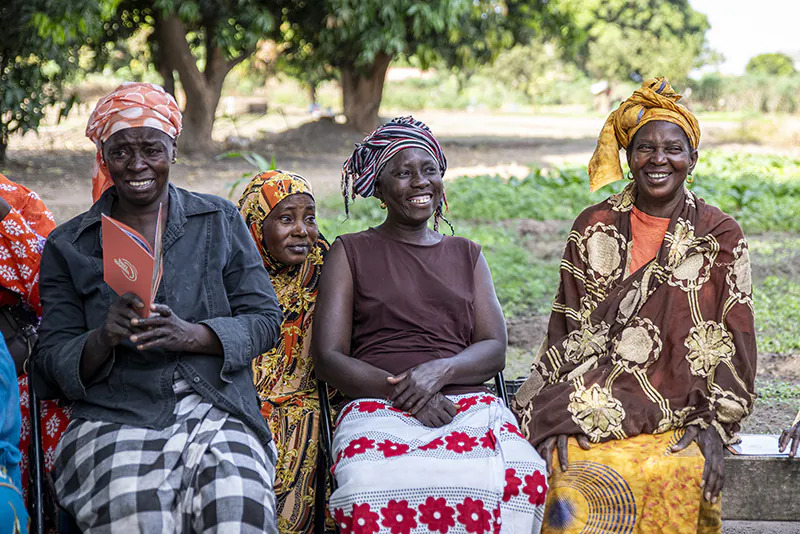
In my home country, Gambia, the story of rural women is both deeply personal and profoundly transformative. Through Buzz Women Gambia, in 8 years, we have reached the doorstep of over 700 communities and trained more than 43,000 women in financial literacy, environmental sustainability, and community leadership. Anchor Women, elected by their peers, lead dialogues in villages, ensuring that empowerment is not a one-time event but a sustained movement.
Consider Mariama, a farmer from the West Coast Region, who joined our inner strength program. With basic training in financial literacy, she began saving modest amounts and eventually invested in poultry farming. Today, she not only supports her family but also mentors other women in her community. Or Aji Fatou, an Anchor Woman from Bafaloto, who mobilised her village to revive an abandoned market in her community after attending our Anchor Women Fellowship program. We call this a beehive project, one of 457 across Gambia, that now generates income for dozens of households while promoting environmental stewardship. Our movement is creating more Mariamas and Aji Fatous in communities and regions across Africa, Asia, South America and beyond.
Yet the challenges Gambian women face–limited access to credit, high debt burden, undervalued labour, exclusion from decision-making–are not unique. They echo across continents. Rural women in India, Mexico, and Spain share the same struggles, and they respond with the same ingenuity. By situating Africa’s journey within this global chorus, we see that rural women everywhere are bound by common struggles and united by extraordinary resilience. Their collective power is not regional; it is universal, and it demands recognition on the world stage.
In India, where we also have the Buzz Women movement, rural women have pioneered one of the largest grassroots financial movements in the world: over 10 million self-help groups (SHGs) involving millions of women collectively manage billions of dollars in savings and credit. Their impact is profound, reducing poverty, increasing household resilience, and fostering leadership among women who were once excluded from decision-making. Beyond economics, SHGs have become platforms for social change, mobilising women around health, education, and rights.
Across Latin America, indigenous and rural women have built cooperatives that challenge systemic inequalities. In Mexico, women-led cooperatives in agriculture and crafts sustain families while preserving cultural heritage. In Guatemala, indigenous women’s cooperatives manage natural resources, generate income, and resist exploitation. These cooperatives are more than economic units; they are spaces of solidarity, identity, and resistance. They show how rural women, often marginalized by both gender and ethnicity, can reclaim agency through collective action.
In Europe, rural women sustain family farms that are vital to food security and ecological transition. In countries like Spain and Slovenia, women are increasingly recognised as leaders in sustainable agriculture, digital innovation, and climate adaptation. Yet their contributions remain undercounted in agricultural statistics and overlooked in policy frameworks. Women on family farms often juggle multiple roles—farm management, caregiving, and community leadership, without formal recognition or adequate support.
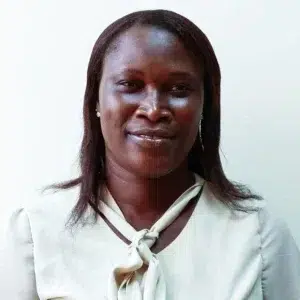
For me, telling these stories goes beyond International Women’s Day. We celebrate and recognise women every day, because their contributions are not seasonal; they are constant. As someone born in Gunjur, a coastal village in the southern part of the West Coast Region and deeply rooted in my community, I have seen firsthand how rural women’s resilience transforms families, villages, and nations. My journey with Buzz Women Gambia is not just professional, it is personal. I stand alongside these women, learning from their courage, amplifying their voices, and connecting their local struggles to global conversations.
This is how I fit into the narrative: as a bridge-builder. My role is to ensure that the vision born in Gambian villages resonates across Africa and beyond. By documenting impact, sharing stories, and advocating for recognition, I seek to move rural women’s labour from the margins to the centre of global discourse. Their power is untold, but it should no longer be unseen. True progress demands that we value the contributions of those who have long been overlooked. Recognising rural women is not charity; it is smart economics, climate resilience, and social justice.
The time has come to ensure that the vision born in villages becomes the foundation of a more equitable world.