Global conflicts often ripple far beyond their immediate regions, as in the current US-Israeli war on Iran. The closure of the Strait of Hormuz—through which about 20% of global oil passes—has driven crude prices to around $100 per barrel and jet fuel above $200. Damage to energy infrastructure, including Qatar’s LNG facilities, has intensified the shock. Although distant, East Africa faces impacts through higher energy costs, disrupted trade and aviation, and strained food supply chains. Additional risks stem from instability in key shipping routes, such as the Red Sea and the Suez Canal, which could force costly detours around Africa.
East Africa’s heavy vulnerability to global energy shocks
Although a few African nations — including Nigeria, Algeria, Angola and Libya — export oil, most African economies are net importers of refined petroleum products. This dependence leaves them particularly sensitive to variations in global energy prices. East Africa is particularly exposed. Even with the region’s increasingly lucrative economies and huge populations, refining ability remains very pared back. Africa holds over 125 billion barrels of oil reserves, more than 18 trillion cubic meters of natural gas, and nearly 40% of the world’s renewable energy potential. Eastern Africa alone has proven crude oil reserves currently estimated at about 4.7 billion barrels, according to the African Energy Commission (AFREC), dominated by South Sudan, Sudan, Uganda and Kenya. These reserves account for about 0.3 per cent of global reserves and around 4 per cent of Africa’s total.
Despite these resources, only South Sudan and Sudan, together producing roughly 189,000 barrels per day of crude oil, produce significant amounts. This represents only 0.2 per cent of global production and roughly 3 per cent of Africa’s output. Civil wars in both countries have further restricted production and infrastructure development.
A region without refineries
Eastern Africa faces a major fuel-supply challenge due to limited refining capacity. Although the region has a theoretical capacity of about 263,400 barrels per day, only a small fraction is utilised, meeting just around 5% of total demand. Even if underused facilities were fully operational, they would cover only about 36% of needs, leaving continued reliance on imports. This shortfall stems from decades of infrastructure decline and refinery closures in countries like Eritrea, Tanzania, and Kenya. Today, only Sudan and South Sudan operate refineries.
Increased fuel prices across East Africa
The effects of the conflict are already being reflected in regional fuel markets. Due to higher prices and shortages, Ethiopia’s Prime Minister Abiy Ahmed has advised citizens to use fuel sparingly and prioritise it for essential purposes. Recently, the government has instructed all public institutions and state-owned enterprises to put non-essential employees on annual leave in an attempt to mitigate the fuel shortage suffocating transportation across the country. Ethiopia alone consumes about 103,689 barrels of oil per day, according to international energy statistics, which is equivalent to 37–44 million barrels per year. Ethiopia spends more than $4.2 billion annually on fuel imports, most of which come from Middle Eastern countries. In Addis, the situation is described as empty tanks, longer days for a city on the move.
In Kenya, fuel prices have not yet risen sharply, but increases are expected. Energy and Petroleum Cabinet Secretary Opiyo Wandayi has accused oil marketing companies of hoarding fuel, an economic crime that carries a minimum fine of Sh1 million. To make matters worse, nearly 65% of Kenya’s tea exports go to markets affected by the war, and cargo vessels are in limbo. Kenya is also a big exporter of meat to the Gulf, where the demand is high during the Eid festival, but there are no cargo flights at present. Shipping costs for his sheep exports from Mombasa, Kenya, to Oman were set to double next month. The Kenya Flower Council, a private-sector organisation representing growers and exporters of cut flowers and ornamentals in Kenya, stated that the ongoing conflict has resulted in over $4.2 million in losses over the last three weeks.
Tanzania’s Energy and Water Utility Regulatory Authority has set a new petrol price cap of 3,820 shillings ($1.49) per litre in Dar es Salaam, up 33% from the March level. Fuel prices in Somalia have nearly quadrupled due to supply chain disruptions, raising the cost of basic goods and transportation. Petrol prices in Mogadishu increased by almost 10 cents every day, from about $0.65 to over $1.15 per litre. In Rwanda, it is likely to be felt within weeks if higher prices persist. Many of these economies are also experiencing currency pressures and limited foreign exchange reserves, which makes fuel imports even more costly.
Everything goes up when oil prices go up
Fuel prices are at the heart of modern economic systems. When oil prices rise, the ramifications ripple through whole economies. The costlier fuel makes shipping, generating electricity, driving tractors and powering factories more expensive. In many African countries, transport already accounts for a high share of the price of goods. This could result in much more expensive food, rising inflation, and strain on household budgets. In many African economies, once food prices go up, they don’t come back down. The most vulnerable will bear the heaviest burden. People in low‑income countries are most at risk when prices rise because food accounts for about 36 per cent of consumption on average, compared with 20 per cent in emerging market economies and 9 per cent in advanced economies.
Fertiliser markets and food security
The conflict may also impact agriculture via global fertiliser markets. According to data from the International Fertiliser Association and the African Development Bank, Africa imports about 30–35 million tonnes of fertiliser every year. While countries such as Morocco, Egypt, Nigeria and Algeria produce fertilisers, much of the continent relies on imports. Energy markets are central to fertiliser production. Natural gas is one of the main feedstocks used to produce nitrogen fertilisers such as urea and ammonia, so increases in energy prices tend to translate into higher fertiliser costs.
Ethiopia and Kenya are especially vulnerable. Ethiopia imports some 1.5–2 million tonnes of fertiliser annually, primarily to support crops like wheat, maize and teff. With agriculture accounting for more than half of the population, rising fertiliser prices can quickly translate into higher food prices and lower farm incomes.
Kenya imported about 834,501 MT of fertilisers in 2024. When fertiliser prices rise substantially, farmers typically cut back on the nutrients applied to their crops, resulting in lower yields and higher food prices a few months later. According to UNCTAD, East African imports from the Persian Gulf by sea vary. Kenya imports 26%, Somalia and Tanzania about 30%, and Sudan about 54% through this route.
Aviation disruption and export risks
Air transport is yet another channel through which the conflict could impact East African economies. African aviation is heavily intertwined with Gulf carriers such as Emirates, Qatar Airways and Etihad, which have established major transit points between African cities and Europe and Asia. Ethiopian Airlines cancelled over 165 passenger and cargo flights, resulting in about 135 million dollars in lost revenue during the first week of the war with Iran. Air travel disruptions can also affect export industries. If air routes get cut or become too expensive, exporters already making slim profits could find themselves under severe strain.
Dubai: Africa’s informal trading hub
This frying pan is not the only connection between the Gulf – specifically Dubai – and Africa’s business economy. Dubai has emerged over the past two decades as a crucial wholesale market for African traders buying electronics, clothes, parts and household goods. They then ship these products to various markets across the continent, such as Merkato in Addis Ababa, Bakara Market in Mogadishu, and Eastleigh in Nairobi. If the costs of shipping and insurance rise, or if transit routes become insecure, the price of imported goods could escalate dramatically as traders pass these costs on to consumers.
Structural vulnerabilities in African economies
The more profound issue is Africa’s structural economic vulnerabilities. African economies are at the intersection of multiple, interlinked risks, ranging from governance issues to high public debt, infrastructure deficits, energy insecurity, and climate pressures, according to the United Nations Conference on Trade and Development (UNCTAD).
The cost of transport and logistics in Africa is estimated at approximately 50 per cent above the global average. In some instances, road transport alone constitutes almost 29 per cent of the final price of goods exchanged within Africa. These inefficiencies compound the effects of global shocks.
Africa’s economic relationship with the Middle East is larger than many observers assume. Trade data compiled by Afreximbank show that in 2024, African countries exported about $52.4 billion in goods to the Middle East, while importing roughly $82.4 billion, making the region Africa’s third-largest import market after Asia and Europe. Much of that import bill is dominated by energy products.
This imbalance leaves African economies vulnerable to what economists call “imported inflation”—a phenomenon where rising global energy prices drive domestic inflation even in countries far removed from the conflict itself. Energy price shocks can rapidly destabilise public finances.
Migration and remittances
Another channel through which this could play out is labour migration. Scores of millions of labourers from the Horn of Africa work in countries across the Gulf. It is estimated that there are nearly one million Ethiopians, 400,000 Sudanese and tens of thousands of Somalis and Eritreans living and working across the states of the Gulf Cooperation Council (GCC). Workers are being laid off or given leave without pay.
In Ethiopia, remittances—including those from the Middle East- account for about 5 per cent of gross domestic product and exceeded $6 billion in 2024. In 2022, an estimated 750,000 Ethiopians were residing in Saudi Arabia, while about 500,000 Kenyans were employed in Gulf states. Recent developments point to growing risks: in Kenya, data for March 2026 showed one of the sharpest monthly drops in remittances in recent years, with up to US$40 million in monthly remittances potentially at risk.
Remittances from these workers are an important source of income for families across East Africa. If the fighting disrupts economic activity in the Gulf or lowers government revenues – especially from energy exports – migrant workers may suffer job losses or declining wages, which can also diminish remittance flows. The Gulf countries have lost $15 billion in energy revenues since the war began, which could also affect their investments in Africa, such as the new airport project in Rwanda, to be partly funded by Qatar.
Opportunities and scenarios for Africa’s economic future
Three broad scenarios could shape Africa’s economic outlook. If tensions de-escalate quickly and shipping routes reopen, the continent may experience only a temporary inflationary shock lasting a few months. If disruptions persist for several months, the consequences could include higher subsidy costs, currency depreciation and rising food prices. A prolonged conflict affecting energy infrastructure could trigger a more serious energy crisis, potentially leading to fuel shortages, fertiliser scarcity and political instability in vulnerable economies.
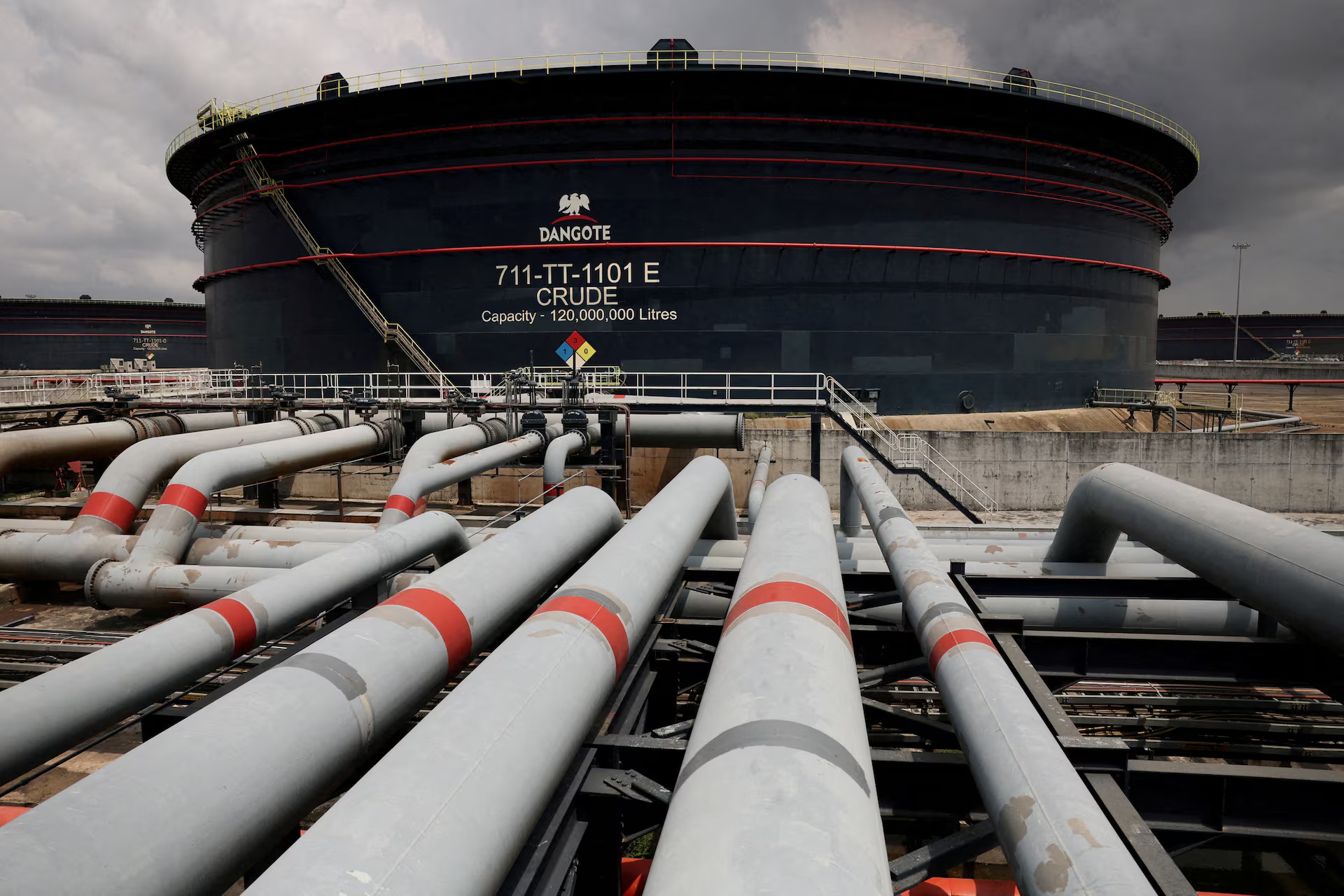
The current crisis has opened new opportunities. The Dangote Petroleum Refinery is rapidly transforming Nigeria from a dependent importer into a regional powerhouse, leveraging its full 650,000bpd capacity. The refinery recently sold 12 cargoes, amounting to 456,000 tonnes of refined products, mainly petrol, to Côte d’Ivoire, Cameroon, Tanzania, Ghana and Togo.
Lamu and Mombasa ports have seen a significant increase in vessel traffic and cargo offloading. According to the Kenya Ports Authority (KPA), Lamu port has received 74 vessels so far this year, roughly a third of all the ships it has handled since opening in 2021. In stark contrast, it handled just two container ships in the first quarter of last year.
In the long term, Africa needs to utilise its renewable energy resources, exploit existing resources, establish more refineries, and promote inter-African trade.