


In late September 2025, a military court in Kinshasa delivered a judgment that could blow up the foundations of the Congolese state. It sentenced former President Joseph Kabila — the son of another president who was assassinated in office — to death in absentia, along with several former generals and political allies, for allegedly supporting rebels in the east.
It was the kind of verdict that looks decisive from the hilltop of power but feels suicidal from the valley below.
The Democratic Republic of the Congo, a country that has not had a true peaceful transfer of power since its independence in 1960, has consistently struggled with how it handles its former rulers. In fact, the country has had only one peaceful handover. In January 2019, after eighteen turbulent years in power, Joseph Kabila Junior handed the presidency to Félix Tshisekedi. He allegedly helped him steal the vote in a cynical move, ditching his own party’s candidate, Emmanuel Ramazani Shadary, and robbing Martin Fayulu, the Engagement for Citizenship and Development (EciDé) leader whom independent tallies showed had actually won. It was an imperfect transition, bruised by these accusations of backroom deals and rigged tallies, but in the long, violent history of the Congolese state, it stood out as a rare moment of restraint.
Otherwise, from Mobutu Sese Seko’s fall in 1997, to the assassination of Laurent-Désiré Kabila in 2001, and now this dramatic sentencing, Congo’s transitions have been soaked in blood, betrayal, and the sort of grudges that outlive their holders. Yet this — sentencing a former head of state to death — is a frontier even the DRC had not crossed before.
A Rare Political Suicide
In modern African history, contrary to common perceptions, it is rare for a former president to be sentenced to death by his successor. Even in the most vindictive of post-coup climates, most leaders have preferred exile, quiet humiliation, or a conveniently timed amnesty to outright execution.
When Cameroon’s first president, Ahmadou Ahidjo, went into exile in 1982 after handing power to Paul Biya – now 92 and seeking to extend his rule to 50 years – he was later accused of plotting a coup. In 1984, a military tribunal (Africa’s military tribunals!) sentenced him to death in absentia. However, in one of his rare moments of restraint, Biya never tried to enforce it. Ahidjo lived quietly in Senegal until he died in 1989.

Then there was Jean-Bédel Bokassa of the Central African Empire, who ruled from 1966 to 1979 and crowned himself “Emperor” in a ludicrous ceremony modelled on Napoleon’s. His reign was grotesque — rumours of cannibalism, the massacre of over 100 schoolchildren in Bangui, and a lavish lifestyle that made Mobutu look thrifty. After his overthrow, Bokassa was sentenced to death in 1987, but his punishment was later commuted to life imprisonment, then to release. He returned home, where he died peacefully in 1996, still insisting he’d been misunderstood.
The moral, if there was one, was simple: Africa’s survivors are those who understand that humiliation, however bitter, is cheaper than chaos.
For Congo, however, the temptation of vengeance has always been irresistible. When Mobutu Sese Seko was toppled in 1997 by Laurent Kabila’s advancing rebel army, the old leopard fled to Morocco, dying there a few months later. His palaces were looted, his statues torn down, and his name cursed — but his family and many of his lieutenants were left alone. Some even found their way back into government.
That pragmatic amnesia helped Laurent Kabila consolidate power. It wasn’t forgiveness born of democracy — the elder Kabila ruled with suspicion and intolerance — but it was a shrewd recognition that Congo’s wars never truly end; they merely change addresses.
Now his son, Joseph Kabila Junior, faces the mirror image of that history. After ruling from 2001 to 2019, he retreated to his farms in Haut-Katanga, wielding quiet influence while Tshisekedi navigated a fractious, rebel-torn, and mineral-rich state. But his death sentence has turned him from a fading ex-president into a political martyr — a dangerous transformation.
Turning Man into a Volcano
The logic of this verdict is fatally flawed. If Kabila truly funded the rebels, the government could have built a transparent and credible civilian case. Instead, a military tribunal, notorious for its opacity and political obedience, turned justice into a weapon — and in doing so, might have made the accused more powerful than he was before the trial.
Sentencing a man like Kabila to death doesn’t neutralise him. It tells his followers, particularly in Katanga and among elements of the security services, that he has nothing left to lose. It erases any incentive for retreat or reconciliation. And it tells every other political figure that to lose power in Congo is to risk the noose.
A wiser course would have been to leave space for private or civil actions — to let citizens or victims pursue justice through political or moral channels, while the state kept its hands clean of vengeance. Instead, Kinshasa chose a verdict that leaves no room for retreat.
This is where Congolese leaders have consistently failed the test of statecraft. They mistake revenge for strength and mercy for weakness. They cannot accept that in a country as sprawling and volatile as Congo —with over 120 active armed groups — restraint is not a luxury but a survival instinct.
Every time Kinshasa has tried to centralise justice or vengeance, the peripheries have exploded. Arrest a warlord and another dozen rise; denounce a rebel movement and three more sprout. Now, by sentencing a former president to death, the government is adding more fuel to fires it already cannot contain.
Elsewhere on the continent, even the most brutal leaders have been treated with a wary mercy — not because they deserved it, but because peace demanded it.
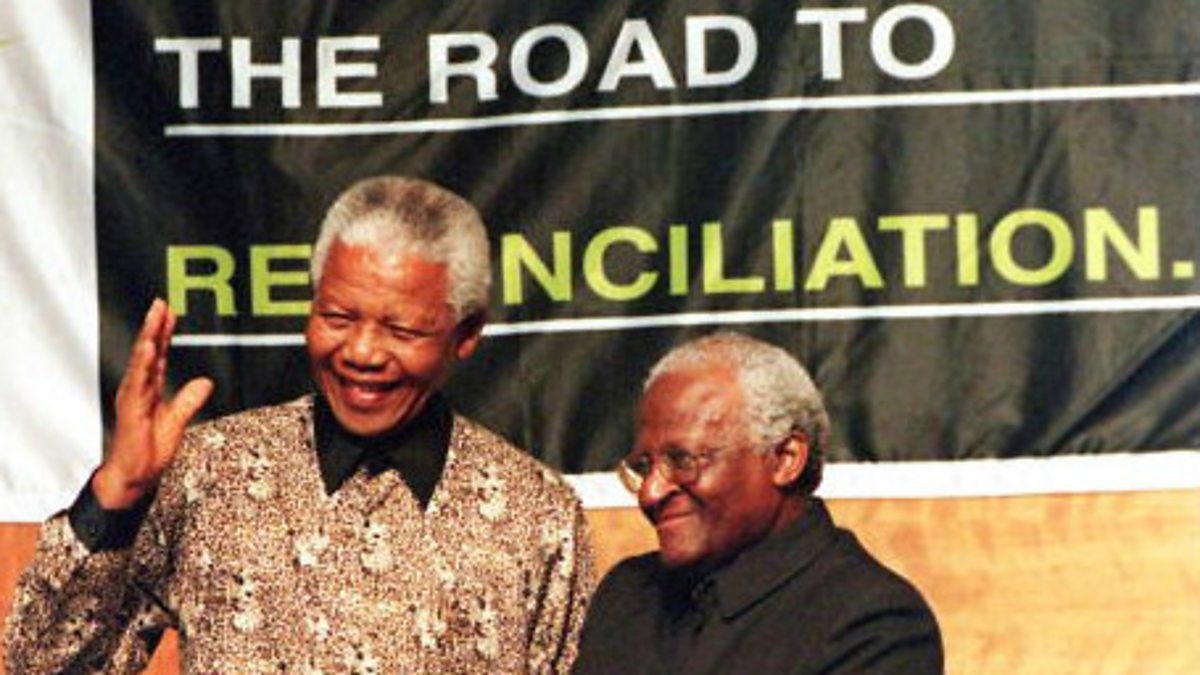
After apartheid ended in 1994, Nelson Mandela chose forgiveness over retribution. The Truth and Reconciliation Commission let confessed killers walk free in exchange for the truth. It was morally unbearable for many victims, but politically necessary for the country to survive.
In Mozambique, the civil war between FRELIMO and RENAMO (1977–1992) killed over a million people, most through starvation and disease. RENAMO’s atrocities were legendary — villages wiped out, children abducted, civilians mutilated — yet when the guns fell silent, the government chose amnesty. RENAMO’s commanders became politicians. The moral wound ran deep, but the political healing worked. Mozambique never went back to war on that scale.
Even beyond Africa, the pattern holds. Spain’s “Pact of Forgetting” after Francisco Franco’s dictatorship ended in 1975 meant no prosecutions for the regime’s crimes. It was unjust, but it bought four decades of democratic calm.
History, uncomfortable as it may be, tends to reward nations that forgive for their survival.
Justice As a Boomerang
Congo’s tragedy is that it still believes it can punish its way to peace.
In the early 2000s, when the International Criminal Court (ICC) indicted warlords such as Thomas Lubanga and Germain Katanga, the government of Kinshasa was not pleased. But the arrests removed the few commanders who were still keeping fragile ceasefires alive. The rebels adapted, splintered, and rearmed. Two decades later, the M23 rebellion will soon the first anniversary of its firm control of large swathes of North and South Kivu.
Now, with a death sentence on Kabila, Congo risks replaying the same mistake on a grander scale: pushing political opponents underground, into alliances with the very rebels Kinshasa claims to be fighting.
It’s not too late to step back. The government could quietly set aside the verdict, let it fade into procedural obscurity, or reopen it under civilian jurisdiction. Better still, the state could leave room for citizens and civil bodies to pursue political or moral accountability, without criminalising the former president.
The wiser path — the one history rewards — is not to kill your predecessors, but to outgovern them.
It is a lesson the country never seems to learn — it just reloads the same old gun. Every generation presses the same trigger, convinced it will finally hit peace, and instead hits itself.

