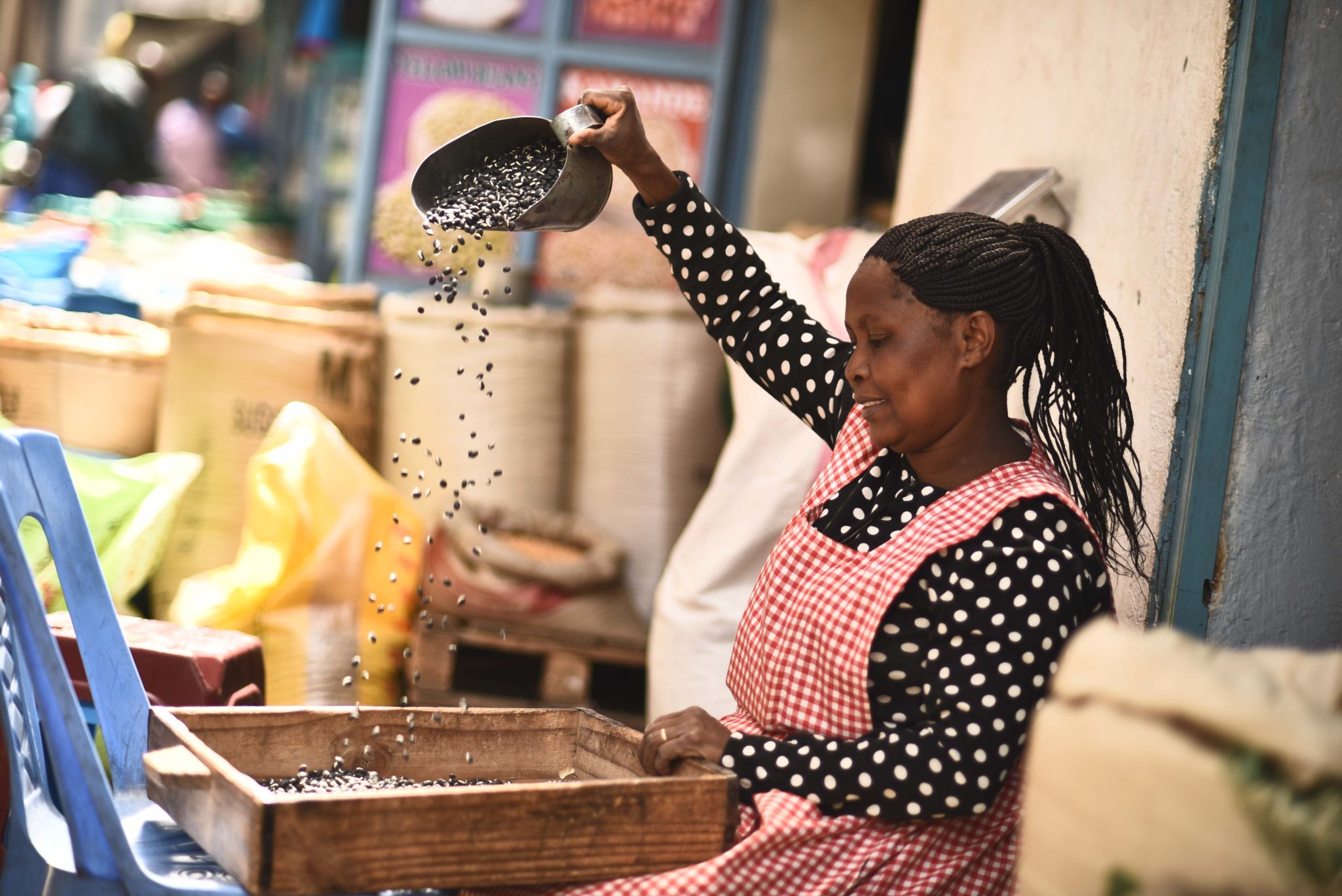
Being in North East Nigeria, I have learned to read global economics and politics through local realities. One week the price of fertilizer shifts, another week fuel becomes scarce and suddenly a family that was “managing” is skipping meals.
When people ask what changed, I often think of a local proverb: When two elephants fight, the grass suffers. The elephants may be far away; conferences, boardrooms, capitals, war fields; but the grass is right here: our households, our communities and our fragile trust in the state.
The Iran vs Israel and US dynamic is demonstrating how quickly military logic can overwhelm broad-based diplomacy, even as intermediaries scramble to keep channels open and global institutions call for de-escalation. These are signals of major shifts where security and strength is outpacing diplomacy and cooperation.
Official development assistance is already tightening. Data shows aid fell in 2024, and the OECD projects further cuts in 2026, warning that sub-Saharan Africa could face steep reductions in net bilateral Official Development Assistance if announced cuts proceed.
At the same time, military spending is surging: Stockholm International Peace Research Institute estimates global military expenditure will reach $2.718 trillion in 2024, the highest level it has recorded.
These are not mere statistics or news, Africa is already experiencing the ripple effects; volatile food prices, rising input costs, disrupted supply chains, and increasing vulnerability among households.
My argument is not that multilateralism has died. It is that it is being outcompeted by nationalism and Africa cannot continue to wait for the “rules-based order” to rescue us. This is where intentional localisation becomes very critical.
Localisation is often framed as a technical shift in development practice. It is not. At its core, localisation is about power: who decides, who controls resources, and who carries risk. Today, African institutions and communities are often at the frontline of implementation, bearing the greatest risks, yet they have the least control over resources and decision-making. That imbalance is no longer sustainable. In true localisation power is redistributed, not risk and responsibilities, creating an avenue for collective power, capacity sharing and solidarity.
Africa can shape global norms when we lead with strategy and unity through collective power. Consider the Ghana-led UN General Assembly resolution declaring transatlantic slavery the “gravest crime against humanity.” It is more than a symbolic vote, especially when the ‘power holders’ debate adjectives, sit on the fence or decide to insist on its legitimacy. It is also a mirror that we can mobilise ourselves to build the institutions that will stop future harm caused by underdevelopment, unfair trade, and chronic dependence.
Decolonolising development doesn’t only shift the power, it sets us free, it ensures we don’t go back into the shackles and chains, it strengthens us to determine the adjectives our countries should tagged with.
The humanitarian system has long committed to direct more funding to local and national actors, but credible tracking shows direct funding remains far below ambition. If global aid budgets tighten further, Africa will pay twice: first through shrinking support, and second through a localisation agenda that is talked about but not implemented.
This is where regional institutions must awaken. West Africa’s own regional bloc is already strained: the exit of Mali, Burkina Faso and Niger from ECOWAS is a warning that political fragmentation can erase decades of integration work. A continent negotiating with the world in pieces will always receive terms, not partnership.
The African Union has documented a path toward more predictable self-financing through mechanisms like the 0.2% levy on eligible imports. However this is not enough. We need to be more aggressive. We have seen Asian countries like South Korea, Singapore, and Japan move from aid recipients to donors, and China has become a major disruptor of global economics and politics.
They used aid for their industrial revolution. They understood that aid was temporary so they strengthened their systems in a way that works for their people.
Africa must take a similar path ensuring aid leads to sustainable development and it must be done on its own terms. We still allow blueprints designed outside our continent without the input of our voices or aspirations of our communities. Aid should be a stepping stone, not the life line.
Even though we have some of the most fertile land on the planet, we have made ourselves net importers of food, which leaves us vulnerable to economic shocks from far away, like the wars in the Ukraine and Iran, which have driven up the price of fuel and fertilizers, increasing the cost of living and of course increased hunger and poverty.
To be sure, advocates of “peace through strength” will argue that deterrence prevents conflict and can force negotiations. Sometimes that is true. However, even when deterrence works, it does not build schools, clinics, roads, or resilient food systems. And when multilateralism weakens, the poorest countries lose the most; because collective rules are often their only protection in an unequal world.
Critics of localisation often raise concerns about capacity or accountability. It is important we acknowledge that the current system is not without its own inefficiencies and failures. The question is not whether localisation is perfect. It is whether the status quo is working. Increasingly, it is not.
What should African-led development look like?
It looks like regional institutions that coordinate diplomacy, trade, and crisis response with credibility. That can finance priorities with less donor dependence. It looks like domestic reforms that expand fiscal space, reduce leakage, and deliver visible services so citizens feel the state working and trust the systems.
It also looks like genuine localisation: direct funding to local organisations; risk-sharing rather than risk-dumping; and decision-making that moves closer to the communities.
When elephants fight, the grass suffers. But grass does not have to remain fragile. When deeply rooted, it grows back stronger.
Africa cannot afford to remain the grass.