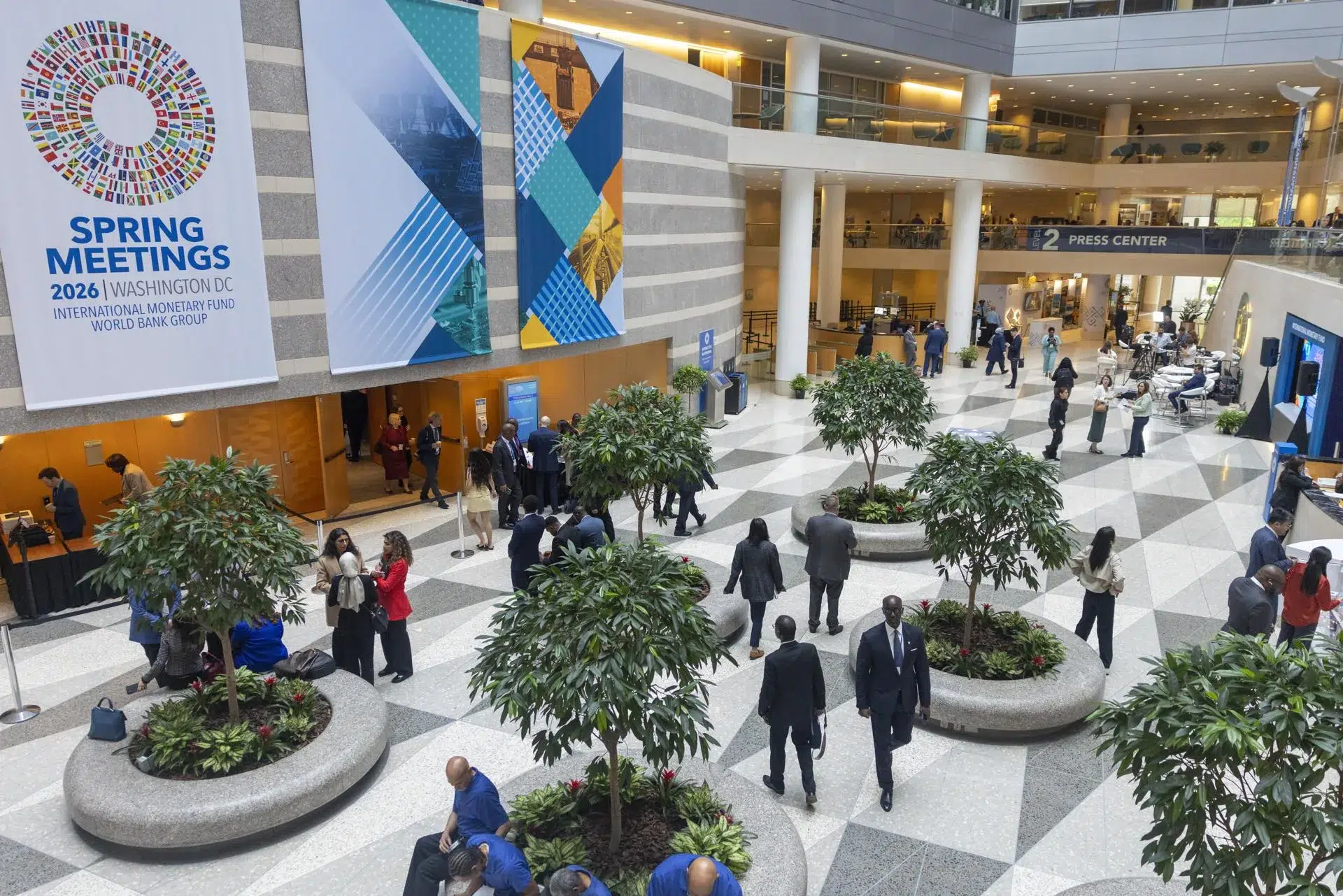
The world’s most powerful development institutions recently gathered in Washington for their 2026 IMF-World Bank Spring Meetings. Africa was discussed at great length. Its financing gaps were mapped. Its resilience was noted. Its structural vulnerabilities were charted. One question that was left unanswered however was whether the framework through which development is being measured, financed, and narrated is actually designed to serve Africans, or merely to manage them.
Now that we are four years away from 2030—the deadline around which so many promises were built—that question can no longer wait.
One of us spent years inside a government ministry, implementing plans that looked persuasive in documents and proved inadequate in practice. The other built an education startup, watching the gap from a different seat. Between us, we have seen and experienced sufficiently to understand the design flaws upon which Africa’s systems are premised.
Consider this scenario: while working with a state-owned market development company in Nigeria that is responsible for large commercial markets, we found a system in which politically connected middlemen had acquired stalls cheaply from the state and leased them to traders at exorbitant rates. The answer seemed obvious. We designed a programme allowing traders to buy their stalls directly, with right of first refusal and financing we believed was affordable. It was economically sound. It would restore agency and loosen an exploitative structure. On paper, it was exactly the kind of reform development textbooks celebrate.
But we had misunderstood the social reality. For many of those traders, it was the middleman who had opened the door for them to do business in the first place. However predatory the arrangement seemed on its surface, the middlemen were also the people who had given them a chance when they had none. There was gratitude embedded in the relationship. Obligation. Memory. Even reverence. A reform that seemed rational to us was experienced by some traders as betrayal toward the people who had supported them from day one. Our model was economically sound and socially incomplete.
Development that does not understand context falls flat on making progress.
We saw the same logical framework fail at scale in a multi-million-dollar entrepreneurship program in Liberia that was well-funded, earnestly designed, and structurally misaligned with the reality it entered. The program arrived with its own definition of success: formalized businesses, intercontinental trade ambitions, standardized curricula. What it found were entrepreneurs operating in a market ecosystem that had not yet developed to match those expectations. Many created businesses not because a market called for them, but because funding was available. Even those who received capital spent months writing plans shaped more by funder expectations than by what their ventures actually needed. Compliance consumed the energy that should have gone into building. The programme was designed with rigour, not context.
These failures do not happen in a vacuum, but represent a deeper confusion underlying Africa’s development; the practice of measuring the continent against models it did not design, under conditions it did not anticipate.
Consider what it means that 73 percent of Sub-Saharan African employment sits within the informal economy. The standard reading is that this represents underdevelopment: a failure to formalize, to grow, to modernize. But take a deeper look. This is tens of millions of people who built livelihoods outside the state, outside donor frameworks, through community trust, kinship networks, and adaptive ingenuity. This system has survived multiple evolutions and external shocks. It represents a model that ‘modernized’ systems are yet to understand or to improve upon.
We are not arguing that Africa should remain informal, but we cannot characterize the system that has upheld our survival as a problem. Formalization alone is not development, but the combination with capability that can guarantee livelihood. Whether to advance as a continent is not the question; but the path to advancement must be built from inside Africa’s actual conditions, not projected from elsewhere.
The same mismatch functions at the continental scale. The Democratic Republic of Congo accounts for over 70 percent of global cobalt output. Yet, Africa captures less than 1 percent of the value generated from manufacturing clean-energy technologies, despite supplying the majority of the minerals those technologies require. A green transition built on the old framework of raw extraction and offshore value capture is not a just transition for the continent, but rather a greener vocabulary for an older, deeply-rooted arrangement.
Trade within Africa tells a parallel story. Africa accounts for only 16 percent of its own trade flows. Yet, 61 percent of regional exports are already processed and semi-processed goods, suggesting that Africa’s most development-compatible market may well be itself. The continent is more externally wired than internally networked, arguably not because it was chosen by Africa, but because it was designed elsewhere.
A different definition is therefore needed. Development in Africa must mean expanding people’s real capacity to live secure, dignified, productive, and politically valued lives. It must mean institutions that solve problems rather than mimic best practices. Education designed around how children actually learn. Agriculture that builds resilience and inward sufficiency, not just export volume. Economies that create decent work, not convenient statistics. And above all: reforms that understand the society into which they are being introduced.
African-first does not mean anti-world. It simply means refusing to confuse external approval with internal transformation. A continent of this scale must not wait to be validated in order to define progress for itself.
To be sure, the real test of Africa’s development is not whether the continent resembles somewhere else. It is whether African societies are becoming more capable, more fair, and more free on their own terms.
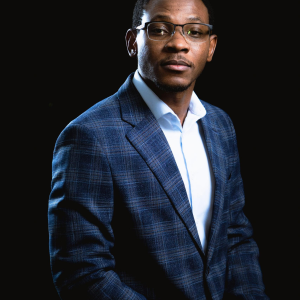
Wainright Acquoi is the founder and CEO of TRIBE in Liberia.