


Since the end of colonial rule, the Democratic Republic of Congo has repeatedly turned to national dialogue as a way of addressing political crises, armed rebellions and social tensions. Political observers have identified more than twenty such initiatives, held either before or after independence, with the stated objective of restoring peace and rebuilding national institutions. Yet most of these dialogues have failed to achieve their central objectives.
The problem, therefore, is not the absence of dialogue. It is the manner in which dialogue has been conceived, organized and implemented. In the DRC, national dialogue has often been less a process of national reconciliation than a negotiation among political elites over access to power. It has also frequently been promoted by foreign actors whose main concern was political stability, rather than the transformation of the conditions producing conflict.
The important questions are consequently not only what these dialogues concluded, but also who participated, who convened them, who was excluded and what happened after the agreements were signed.
A history of repeated political settlements
One of the earliest examples was the Colloque général de Léopoldville in 1959. The meeting was organized in the aftermath of the January 1959 demonstrations that had paralyzed colonial institutions. Although it brought together Congolese leaders, its broader purpose was to calm the masses and allow the Belgian colonial administration to continue governing under more manageable conditions. The meeting did not represent a genuinely sovereign national process. Its framework was still determined by the colonial power, which sought to control the pace and direction of political change.
The Conference of Coquilhatville and the Lovanium Conclave, held between 1961 and 1962, were organized in response to the institutional crisis and the rebellions that followed independence. They contributed to the formation of a new government led by Cyrille Adoula, which included representatives of several competing political tendencies. However, the inclusion of rival political actors in government did not resolve the underlying national crisis. Adoula was unable to reach a durable agreement with Moïse Tshombe’s rebellion in Katanga, despite the presence of the United Nations in the country. His proposal for a federal constitutional arrangement also failed to produce consensus.
These meetings demonstrated an early pattern that would later become familiar. Political actors were brought together and offered positions, but the structural causes of conflict remained unresolved. The result was a temporary redistribution of power rather than a durable political settlement.
The Luluabourg constitutional dialogue of 1964 attempted to establish a strong presidential system that would supposedly move the country further away from the colonial model. Yet the adoption of a new constitution did not bring political stability. Rivalry among national leaders, including Joseph Kasavubu, Patrice Lumumba and Joseph-Désiré Mobutu, continued to shape the political environment and prevented the effective implementation of the dialogue’s conclusions. At the same time, rebellions in Katanga and the Kasai region demonstrated that constitutional reform alone could not resolve conflicts rooted in exclusion, competing visions of the state and control over territory. The question of Banyarwanda nationality further exposed these unresolved tensions. Although earlier nationality legislation had recognized certain Banyarwanda communities as Congolese citizens, the status of both the transplantés, who had been relocated by the colonial Belgian administration to the Congo from Rwanda and Burundi during the colonial period to fill the gap in workforce especially for working on the plantations, and those who had fled Rwanda following the 1959 so-called “Social Revolution” remained contested. The constitutional process therefore unfolded in a context in which legal recognition of nationality had not translated into social or political acceptance, reinforcing broader disputes over belonging, citizenship and access to state institutions.
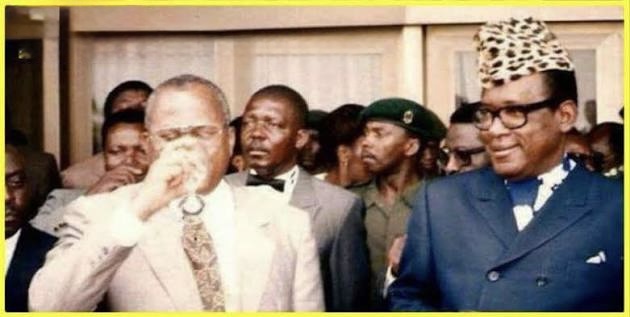
The crisis of the early 1990s produced another series of political consultations. The Concertations of N’Sele and the Palais de Marbre in 1991 emerged from growing pressure on Mobutu’s one-party system. This pressure came from within the country, but it was also influenced by international developments, particularly France’s demand that African governments introduce multiparty politics. The famous speech in which Mobutu declared, “Excusez mon émotion,” symbolized the regime’s attempt to present political change as a controlled and gradual process.
The Conférence nationale souveraine, held between 1991 and 1992, was the most ambitious national dialogue in the history of the Democratic Republic of Congo. It brought together approximately 2,800 delegates and was chaired by the Catholic bishop Laurent Monsengwo. The conference established a transitional government led by Étienne Tshisekedi, then the country’s most prominent opposition leader. However, its apparent inclusiveness concealed significant forms of exclusion. Banyarwanda communities, and more specifically Tutsi groups, including the Banyamulenge, were excluded from participation in the proceedings. This reproduced unresolved disputes surrounding citizenship, belonging and political representation that had already undermined earlier constitutional processes. Their exclusion not only weakened the legitimacy of the conference but also contributed to the political marginalization and insecurity that later fueled armed mobilization in eastern Congo. Although it would be too simplistic to attribute the emergence of these rebellions to the conference alone, the failure to address the citizenship and representation of these communities became one of the grievances invoked in the subsequent formation and mobilization of movements such as the AFDL, the RCD, the CNDP and, later, M23. Despite the relative breadth of its deliberations and the quality of some of its recommendations, the conference was ultimately frustrated by Mobutu, who resisted implementing resolutions that threatened his political survival. Its failure to include all communities affected by the national crisis therefore contributed to the persistence of conflict and helped pave the way for future rebellions in eastern Congo.
The failure of the Sovereign National Conference was especially significant because it revealed the limits of dialogue in the absence of enforcement. A conference may produce persuasive recommendations, but if the incumbent authorities retain the power to ignore or obstruct them, the dialogue becomes politically symbolic rather than institutionally transformative.
The Inter-Congolese Dialogue, held from 1999 to 2003 through meetings in Lusaka, Addis Ababa, Gaborone and Sun City, was convened in the context of the Second Congo War. It brought together the government, rebel movements, political opposition parties and civil society organizations. The process eventually produced an unusual power-sharing arrangement involving President Joseph Kabila and four vice-presidents representing different political and military tendencies.
The arrangement helped create a framework for ending the war, but it also revealed another weakness of the Congolese model of dialogue. Armed groups were rewarded with political positions, while the deeper causes of violence were insufficiently addressed. The agreement did not fully resolve questions relating to security-sector reform, impunity, foreign military involvement or the political economy of natural resources. Moreover, the opposition became increasingly divided once its leaders’ entered government and acquired access to state positions.
How have external actors influenced the outcome of the dialogue?
Across these experiences, national dialogues have generally been shaped by those who already possess political, military or international influence. In the colonial period, the Belgians directly controlled the political framework. In later periods, the influence of Belgium, France, the United Nations, neighboring states, international donors, churches and other foreign actors became more prominent.
Nevertheless, the colonial pattern has persisted. External actors often support dialogue as a way of containing instability, while political elites use it to negotiate their inclusion in government. The language of reconciliation and democracy can consequently conceal a competition for ministries, parliamentary seats and other forms of political patronage.
This explains why many dialogues have resembled contests in political language rather than genuine processes of social transformation. Participants speak about democracy, national unity, constitutionalism and peace, but the final negotiations frequently revolve around appointments and the division of state resources.
The groups excluded from these processes are equally important. Ordinary citizens, victims of violence, women, young people, local communities and many civil society organizations have often had limited influence over the agenda. Even when civil society is invited, participation may be highly selective. Organizations that challenge the interests of the government, armed groups or foreign sponsors may be ignored.
Why do the dialogues fail?
The failure of national dialogues in the DRC since before the independence can be explained by several recurring factors. First, many of them lack genuine national ownership. Their agendas are frequently designed by political elites or external actors before the broader population has been consulted.
Second, the dialogues prioritize elite accommodation over institutional reform. Power-sharing may temporarily reduce tensions, but it does not automatically create accountable institutions or address the grievances of excluded communities.
Third, the root causes of conflict are displaced rather than confronted. These include the weakness of state institutions, impunity for serious crimes, disputes over citizenship and land, foreign interference, corruption, electoral manipulation, unequal access to resources and the absence of meaningful reform within the security forces.
Fourth, there are rarely effective mechanisms to ensure that agreements are implemented. Once the immediate crisis has diminished, powerful actors can abandon their commitments without facing serious consequences.
The current calls for a new national dialogue supported by opposition groups and civil society must therefore be judged against this history. The central issue is not whether Congolese actors should speak to one another. Dialogue is necessary. The question is whether the process will be genuinely inclusive, independently facilitated and tied to a clear mechanism for implementation.
A credible dialogue would need to establish an open agenda, include groups that have traditionally been excluded and address the structural causes of political and social instability. It would also require guarantees that its conclusions would be respected by all the concerned parties. Without such guarantees, the process risks becoming another temporary political arrangement for distributing positions.
There is also a serious danger that dialogue may be used as a strategy of political postponement. If the principal outcome is to delay elections, weaken opposition pressure or extend the political survival of President Félix Tshisekedi without addressing the governance crisis, then the dialogue will reproduce the same pattern as those that came before it.
The history of the DRC shows that dialogue fails when it is treated as an event rather than a process of transformation. Meetings, speeches and agreements cannot substitute for institutional accountability. Unless future dialogues confront the underlying causes of instability and bind political leaders to the decisions they make, the country will continue to move from one dialogue to another without resolving the crisis that made dialogue necessary in the first place.

