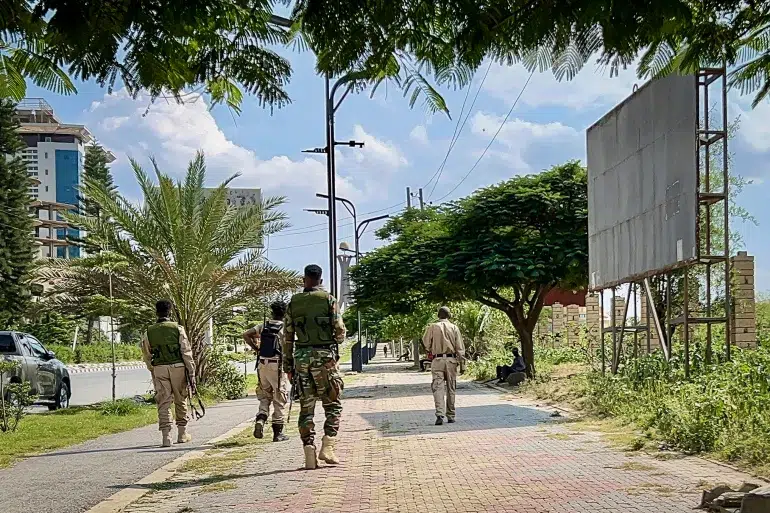
The TPLF’s withdrawal from Mekelle on 3 October may mark the end of an era in Tigrayan politics. It dominated Ethiopia’s federal government for almost three decades, ruled Tigray with an iron fist, and later held Tigray through a devastating war. It now faces an uncertain future. Its retreat has weakened the newly formed rebel alliance against Prime Minister Abiy Ahmed and altered regional actors’ calculations, particularly Eritrea, which hoped to use it against Addis Ababa. Yet a military victory alone will not resolve the grievances that brought Ethiopia to this point.
Abiy bears considerable responsibility for closing the space for peaceful political competition. His government has increasingly treated dissent as a security threat, leaving opponents with diminishing confidence that the ballot box can deliver change. His ambition to reshape Ethiopia around his own authority and legacy has deepened political divisions. Intra- and inter-ethnic conflict has continued while power has become more concentrated at the centre, a shift he has been comfortable with.
The failure to fully implement the Pretoria Agreement, signed in November 2022, further undermined the prospect of a lasting peace. Two contentious issues regarding western Tigray (called Wolgait-Tsegede by Amhara, who also claim it), and returning the IDPs from there to their homes, were left unaddressed. The federal government is not solely responsible. The TPLF’s resistance to demobilisation also weakened the agreement from the outset, allowing mistrust and competing military preparations to replace the political settlement Tigray urgently needed.
The faction led by Debretsion Gebremichael appears to have miscalculated once again. It underestimated the consequences of the TPLF’s organisational split in August 2024 and the depth of public exhaustion after years of war. Its support in rural Tigray may remain high, but that support could not automatically be translated into consent for another conflict.
The faction’s consolidation of power widened the distance between its leadership and those seeking a different political course. Its campaign to displace Getachew Reda, which began in October 2024, was followed by the removal of General Tadesse Werede in April 2026. By severing ties with the federal government and imposing coercive recruitment measures on young Tigrayans, it committed the region to a confrontation whose human costs would again fall principally on civilians. Its survival as an organisation seemed more important than the Tigrayan people.
On 20 September, the faction joined six other rebel movements in what they called the “Alliance for Survival”. Three days later, it launched a new war against the federal government. The apparent objective was a rapid military advance that would threaten Addis Ababa and remove Abiy from power. For a population still struggling with the consequences of the previous war, this was an extraordinary gamble.
Within ten days, that gamble had unravelled. By 3 October, the TPLF had withdrawn from Mekelle, though it was unclear how intact its forces remained. Losing the regional capital does not necessarily mean the movement’s military capacity is destroyed. It does, however, represent a major political and strategic retreat.
The Tigray Peace Forces (TPS), allied with the federal government, played an important role in that outcome. Drone attacks have been used against Ethiopia’s Air Force bases and facilities, including in Addis Ababa, for the first time, though the source of those attacks remains unknown. For Ethiopia’s armed forces, the campaign offered a victory that could restore confidence after years of difficult engagements. Whether they can consolidate it will depend on what follows: the treatment of civilians, the establishment of credible regional authority and the management of the armed groups that helped secure the advance.
The TPF’s future is therefore a central question. Will Addis Ababa continue to regard them as partners, or demand their disarmament once federal control has been established across Tigray? Fano’s experience after the Pretoria Agreement offers a reason to examine that question closely. Armed allies can become adversaries when their usefulness to the central government ends, particularly when their political demands remain unresolved.
The reported clashes between the Tigray Peace Forces and the Amhara-based Ye Raya Zeb following the takeover of Alamata suggest that tensions within the victorious camp may already be emerging. These disputes could worsen if questions of territory, local authority, and military command remain unsettled.
Debretsion’s description of the conflict as a regional war, in his first appearance since the fighting began, also raises questions about the movement’s objectives and external relationships. His remarks suggest that the TPLF saw itself as part of a confrontation extending beyond Tigray. They do not, by themselves, establish that it was fighting on behalf of foreign sponsors. But they invite scrutiny of whose interests the renewed war served, and whether those interests coincided with the needs of Tigray’s population.
Whatever assistance the leadership may have expected from Eritrea, it did not receive enough to reverse the outcome. The TPLF may now return to guerrilla warfare, drawing on surviving forces and its rural networks. Reclaiming control of Tigray, however, would be far more difficult. Its leadership would have to rebuild military strength while persuading a war-weary population to endure another prolonged struggle.
Defeat could also leave the movement more dependent on external actors, including the Eritrean regime. Such dependence would reduce its freedom to act and expose it to priorities it can barely control. A movement that once governed Tigray would risk becoming an instrument in a wider regional contest.
The setback has also weakened the Alliance for Survival. An alliance formed to remove Abiy now faces the loss of one of its most consequential members as a force capable of holding territory and sustaining a major offensive. For Eritrea, the TPLF’s defeat may narrow whatever opportunities it saw to exert pressure on the Ethiopian government through armed opposition.
The next danger lies along the Eritrea–Ethiopia border. As fighting moves closer to that frontier, the risk of direct confrontation grows. Such a war is not inevitable, but mutual hostility, military mobilisation, and competing regional ambitions make escalation a serious possibility.
A confrontation would reach beyond the two countries. It could reshape alignments across the Red Sea and intersect with the conflict involving the Houthis and Saudi Arabia in Yemen. The Yemeni forces allied with Saudi Arabia have claimed to have taken control of Bab Al-Mandeb from the Houthis and the southwest parts of Yemen’s coastline, though the Houthis deny that. Governments and armed movements would reassess their interests, seeking partners and access in an increasingly interconnected theatre of conflict.
The UAE is fully behind the government of Ethiopia and, according to open-source intelligence, it has been regularly supplying arms to it. Ethiopia has become the UAE hub in the region, supplying support to the Rapid Support Forces (RSF) in Sudan. Israel has also supported Ethiopia’s quest for sea access. Both countries are also allied to Somaliland. The leaders of Eritrea, Egypt, Sudan, and Somalia held a summit at El-Alamein, which addressed, among other things, the need to uphold the fundamental principles and pillars of international law as the basis for regional stability and cooperation, particularly respect for the sovereignty, stability and territorial integrity of the countries of the region.
Somalia’s president still maintains a close relationship with Abiy, so his participation in the summit remains symbolic. It is unclear whether Egypt will come to Eritrea’s rescue, beyond supplying weapons, if Ethiopia attacked it. Its conflict track record does not suggest that. If a war breaks out between the countries, it will be devastating and may reshape the whole region,
For now, Abiy has gained a military advantage, while the TPLF faces perhaps the most difficult reckoning in its history. Whether this becomes the end of its dominance or another stage in a prolonged insurgency remains uncertain. The more consequential question is whether Ethiopia’s leaders will use this moment to reopen political space and pursue a durable settlement. Abiy’s track record and his speech yesterday at the 7th session of the Ethiopian parliament do not change. Without that change, victory may merely mean continuation of a protracted war on all fronts and an increase in the suffering of the Ethiopian people. What Ethiopia and the region need is peace.