

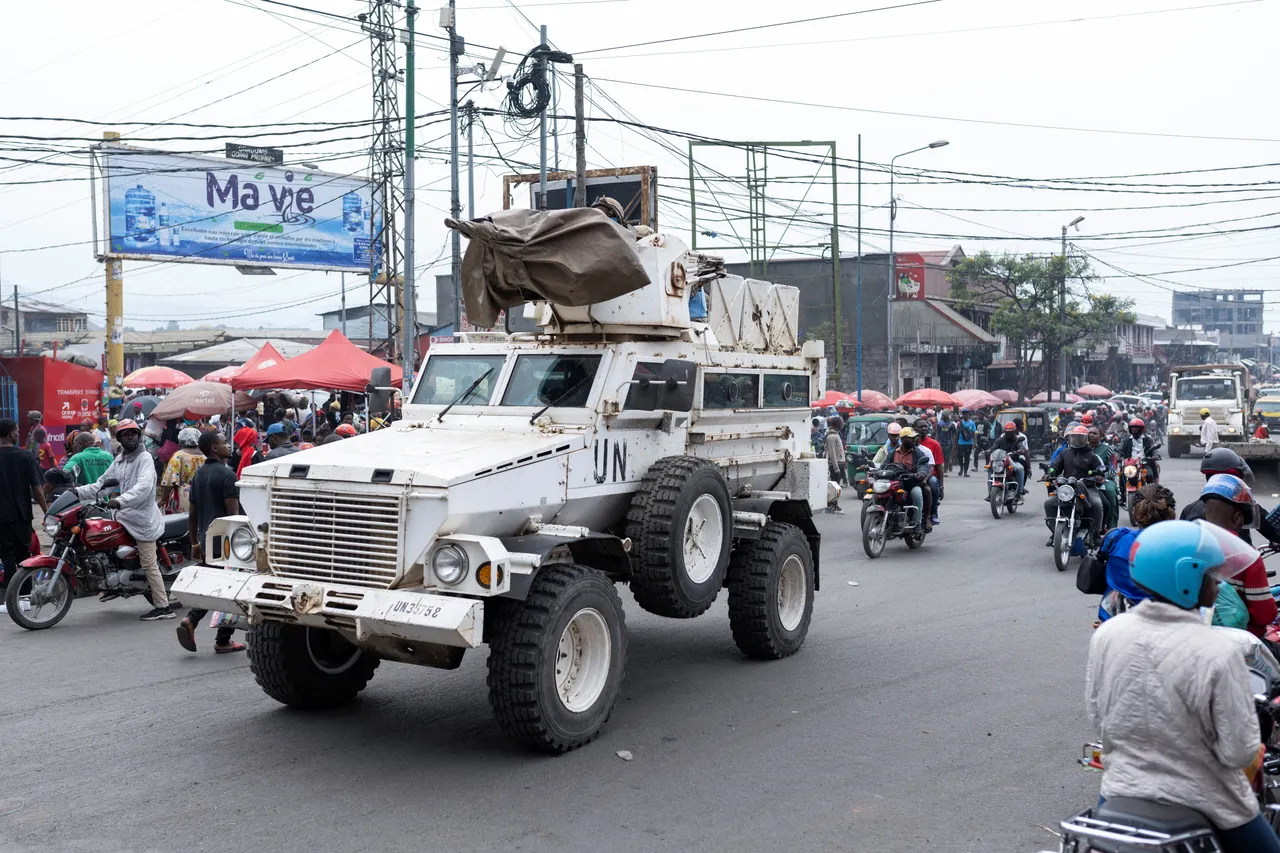
The United Nations Organization Stabilization Mission in the Democratic Republic of the Congo (MONUSCO), along with its predecessor, MONUC, represents one of the longest, most expensive, and structurally complex peacekeeping operations in the history of international diplomacy. Established with the overarching objective of stabilizing eastern Congo, protecting civilian populations, and assisting the Government of the Democratic Republic of the Congo in neutralizing non-state armed actors, the mission has operated with a budget frequently exceeding one billion dollars annually. Despite this monumental commitment of global resources, the security landscape in eastern Congo has undergone severe degradation. Rather than achieving its intended stabilization benchmarks, the mission’s multi-decade trajectory highlights deep systemic breakdowns. An empirical examination of MONUSCO’s operational footprint reveals a profound divergence between United Nations Security Council mandates and conditions on the ground, characterized by the exponential multiplication of insurgent groups, an inability to neutralize foundational threats, and institutional non-compliance with the United Nations Human Rights Due Diligence Policy (HRDDP).
The Proliferation and Escalation of Non-State Armed Groups
A primary metric for evaluating the efficacy of any international stabilization mission is its capacity to disarm non-state combatants, curtail violence, and re-establish state authority over unstable territories. When MONUC was initially deployed following the signing of the Lusaka Ceasefire Agreement, the regional security matrix was dominated by a manageable number of large, identifiable belligerents. Over two decades later, under MONUSCO’s extended watch, the security environment has fractured into extreme complexity. Rather than witnessing a contraction of illegal combatants, independent security analysts and UN monitoring mechanisms report that the number of active armed groups operating in North Kivu, South Kivu, and Ituri has expanded exponentially to well over one hundred and twenty distinct factions.
This proliferation represents a central operational failure of the UN’s stabilization strategy. MONUSCO’s reliance on static defense postures and garrison-style deployments created vast security vacuums across rural territories. In these unmonitored spaces, localized militias and transnational criminal networks emerged to fill the power void. The mission’s inability to establish a credible strategic presence or enforce real deterrence permitted armed groups to entrench themselves within regional economic networks, relying on the illicit exploitation of natural resources to fund their expansion. Consequently, the local population has experienced compounding insecurity, as the peacekeepers failed to disrupt the structural conditions that incentivize the creation and survival of insurgent factions.
The Unfulfilled Mandate to Neutralize the FDLR
The persistence and operational survival of the Forces Démocratiques de Libération du Rwanda (FDLR) serves as another critical indicator of MONUSCO’s strategic failure. Founded by remnant perpetrators of the 1994 Genocide against the Tutsi in Rwanda, the FDLR has functioned for decades as a major driver of regional instability, severe human rights violations, and cross-border attacks in the African Great Lakes region. Recognizing the unique threat posed by this group, successive UN Security Council resolutions explicitly directed the peacekeeping mission to prioritize the neutralization of the FDLR’s command architecture and combat infrastructure.
This objective was reaffirmed with the adoption of Security Council Resolution 2098 in 2013, which authorized the creation of the Force Intervention Brigade (FIB). Designated as an offensive asset, the FIB was specifically tasked under subsequent mandates, including Security Council Resolution 2765 (2024), paragraph 36(b), with carrying out targeted offensive operations, either unilaterally or jointly with Congolese security forces, to neutralize armed groups and reduce the threat they pose to civilian security. However, MONUSCO’s deployment of the FIB against the FDLR remained hesitant, inconsistent, and ultimately ineffective. Instead of carrying out sustained military campaigns to dismantle the FDLR’s leadership structure, the mission engaged in sporadic and superficial operations. This operational passivity allowed the FDLR to maintain its sanctuaries in North and South Kivu, integrate itself into the political economy of eastern Congo, and continuously commit gross violations of international humanitarian law without facing decisive military opposition from the peacekeeping forces charged with its eradication.
Institutional Contradictions and Legal Breaches under the HRDDP
The most severe structural compromise of MONUSCO’s legitimacy stems from its operational relationship with the Armed Forces of the Democratic Republic of the Congo (FARDC) in light of the United Nations Human Rights Due Diligence Policy (HRDDP). Promulgated in document A/67/775-S/2013/110, the HRDDP establishes clear, mandatory obligations governing all UN entities providing support to non-UN security forces. Paragraph 1 of the policy explicitly mandates that UN support cannot be provided where there are substantial grounds for believing there is a real risk of the receiving entities committing grave violations of international humanitarian, human rights, or refugee law, and where relevant authorities fail to implement corrective measures.
The legal standard defining “grave violations” under HRDDP Paragraph 12 includes war crimes, crimes against humanity, summary executions, extrajudicial killings, torture, and widespread sexual violence committed by recipient units or senior command figures. Furthermore, HRDDP Paragraphs 26 and 27 explicitly mandate that if a UN entity receives reliable information that a recipient force is continuing to engage in grave violations despite UN intercession, the entity must suspend or withdraw its support.
MONUSCO’s operational conduct directly violated these principles. Extensive documentation from human rights organizations and UN monitoring bodies demonstrates that the FARDC has consistently formed operational coalitions and tactical alliances with notorious illegal armed groups, including the FDLR, various Nyatura factions, and the umbrella militia coalition known as the Wazalendo. These affiliated armed groups have been repeatedly implicated in mass atrocities, widespread civilian massacres, summary executions, and systematic sexual violence.
Despite these well-documented alliances and human rights abuses, MONUSCO continued to provide extensive logistical, operational, and intelligence support to the FARDC. As highlighted in the report of the UN Human Rights Council fact-finding mission (A/HRC/60/80, Para 12), military operations in eastern DRC regularly involved overwhelming FARDC troops directly supported by MONUSCO, operating alongside foreign military contractors and embedded militia coalitions. The Secretary-General’s report on MONUSCO (S/2025/590, Para 22) similarly highlighted ongoing operational coordination, detailing how the Mission and the FARDC deployed thousands of joint patrols across Beni, Ituri, and North Kivu.
While Security Council Resolution 2765 (2024), paragraph 35 and paragraph 36(c), explicitly mandated that all support, including rations, fuel, and joint tactical planning, must be conducted in strict compliance with the HRDDP, MONUSCO continuously ignored these legal triggers. By funneling logistical assets, fuel, intelligence, and operational backing to a state security apparatus actively co-operating with illegal militias, MONUSCO breached its own binding regulatory framework. Rather than conditioning its assistance on the complete severance of FARDC links to criminal militias, MONUSCO subsidized and legitimized a joint war effort that directly violated international human rights standards.
Structural Legacy of MONUSCO
The multi-decade trajectory of MONUSCO presents an instructive case study in the systemic limits and structural contradictions of modern UN peacekeeping. The mission failed to achieve its core parameters. Non-state armed groups expanded from isolated factions into an unmanageable network of over one hundred and twenty active insurgencies. The FDLR remained largely entrenched despite explicit offensive authorization under Resolution 2765 (2024). And, the Protection of Civilians mandate was repeatedly undermined by operational passivity. Most critically, MONUSCO’s persistent operational partnership with the FARDC, in the face of documented state collaboration with abusive militias such as the FDLR, Nyatura, and Wazalendo, constituted a continuous breach of the Human Rights Due Diligence Policy set forth in document A/67/775-S/2013/110. Ultimately, by prioritizing state support over legal compliance and operational efficacy, MONUSCO compromised its neutrality and failed to deliver sustainable peace to the population of eastern Congo.

