
Countries invest considerable diplomatic energy in winning leadership of international organisations, and far less in asking what those institutions deliver to the people they claim to serve. The contest over the leadership of the Organisation internationale de la Francophonie (OIF), which ended in deadlock at its summit in Phnom Penh on 16 November 2026, is a reminder of a question Africa should ask more often. What does membership of these bodies actually mean, and how well is the continent using its collective weight?
Francophonie is often understood narrowly, as a club of French speakers. In reality the OIF is a multilateral organisation with a mandate spanning political cooperation, education, culture, economic development and democracy. Its roots go back to 1970, when its predecessor agency was founded in Niamey. It now brings together 90 states and governments: 53 full members, five associate members and 32 observers. About half of the full members are African. It is a rare forum where Europe, Asia, the Americas and Africa share a table, which is precisely why the way Africa behaves inside it matters.
The demographic argument is strong. The OIF’s 2026 report counts 396 million French speakers worldwide, around 65 percent of them in Africa. Some of the rise from 321 million in 2022 reflects a new counting method that includes schoolchildren aged six to nine, but the direction is unmistakable. Africa is no longer an extension of the Francophone world. It is becoming its centre of gravity. Yet demographic importance and institutional influence are not interchangeable.
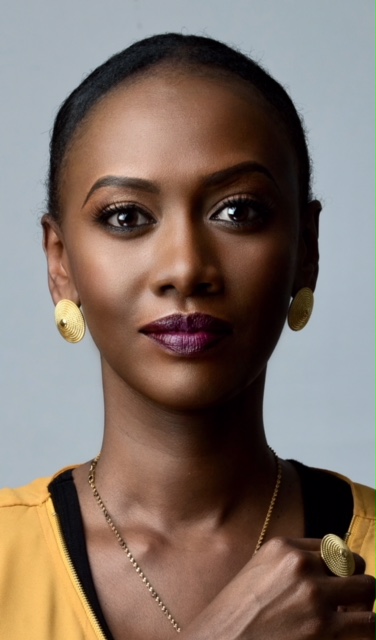
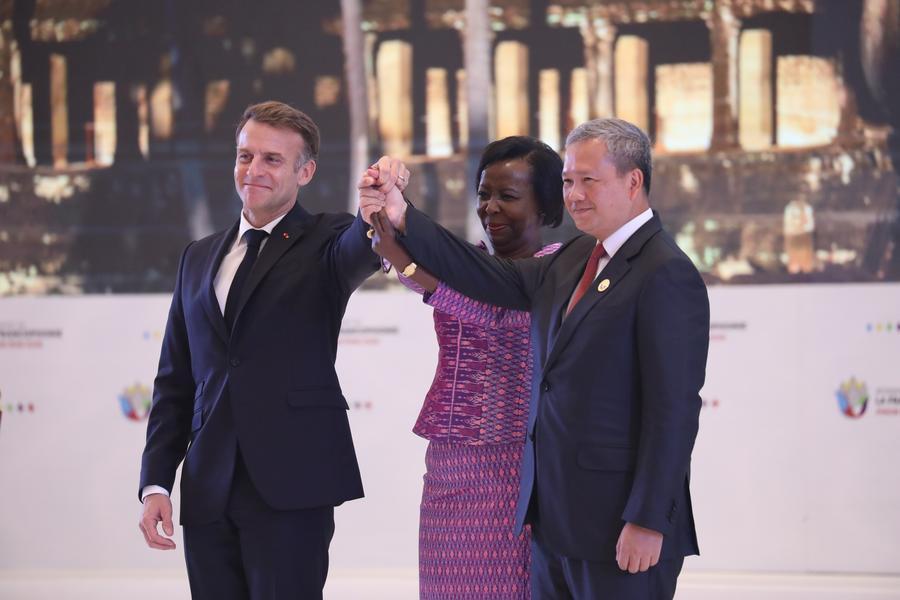
That is where Louise Mushikiwabo’s leadership becomes significant. A former Rwandan foreign minister, she was elected Secretary-General in October 2018 and re-elected in November 2022, becoming one of the most prominent African women to lead a major international organisation. Her appointment mattered not merely because she was Rwandan, but because it placed an African political figure at the head of an institution whose historical and diplomatic centre had long been associated with France.
Her tenure also carried a historical irony. After the 1994 Genocide against the Tutsi, relations between Kigali and Paris deteriorated sharply, Rwanda shifted towards English in education and administration, and it joined the Commonwealth in 2009. Her election in 2018 was widely read as a diplomatic victory for Kigali, a sign of Rwanda’s growing clout despite that Anglophone pivot. It showed that even relationships shaped by painful histories can evolve, and that African countries increasingly hold positions of consequence in Francophone institutions rather than simply taking part in an arrangement designed elsewhere.
Phnom Penh showed how hard it is to separate institutional interests from national calculations. The Democratic Republic of Congo opposed a third term for Mushikiwabo, its objection entangled with the conflict in eastern DRC and, according to AP, backed by a threat to leave the organisation if she was re-elected. Kinshasa first advanced Juliana Amato Lumumba, a former culture minister and daughter of independence leader Patrice Lumumba. On 14 November it withdrew her and backed Romania’s Dacian Cioloș, a former prime minister. That decision cut across an African Union position that had endorsed three African candidacies: Mushikiwabo, Lumumba and Mauritania’s Coumba Ba.
Member states could not reach the consensus the rules now require. They accepted a proposal from Cambodia, the summit chair, to extend Mushikiwabo’s mandate by twelve months, on the understanding that she will not seek another term. A successor is due to be chosen in 2027, once clearer election rules are agreed. The summit’s own theme, investing in peace for shared prosperity and lasting stability, made the deadlock all the more awkward. The episode exposed how easily a bilateral dispute can paralyse a multilateral institution, and it raises a wider question about the nature of influence in African diplomacy.
The DRC is not simply another member state. It holds some of the world’s largest deposits of copper and cobalt, minerals essential to the energy transition, advanced manufacturing and emerging technologies. It is also home to the world’s second-largest tropical rainforest and possesses vast hydropower potential. As Washington, Beijing and European capitals compete for critical minerals, and as supply chains are redrawn, Kinshasa can negotiate partnerships that go well beyond the traditional language of development assistance.
President Félix Tshisekedi’s government has done exactly that. In December 2025 it signed a strategic partnership agreement with the United States, alongside the US-brokered peace accords with Rwanda, linking critical minerals cooperation to security and stability in the Great Lakes region. The agreement gives American companies preferential access to minerals that have been exported mainly to China. The DRC has also pursued a partnership with the European Union on responsible mineral value chains, aimed at strengthening investment and curbing the illicit trafficking of resources.
This is a significant evolution in African economic diplomacy. For decades the continent’s resources were discussed in terms of extraction, foreign investment and the interests of outsiders. Increasingly, governments are treating minerals as bargaining instruments. The question is no longer who wants access to African resources, but what African countries are getting in return. Congo’s foreign minister made the point at a United Nations meeting on critical minerals this year, warning that the energy transition must not reproduce a model in which raw materials leave Africa while processing and technology stay elsewhere.
Leverage, however, is not transformation. Strategic minerals do not automatically produce strong institutions, prosperity or security. The US agreement is itself contested: Congolese lawyers and rights groups challenged it in January 2026, arguing that it compromises national sovereignty. Whether such deals deliver local processing, jobs and revenue depends on negotiating capacity, transparency, sound governance and regional cooperation.
Nor should this resource diplomacy be conflated with the Francophonie contest. There is no established basis for claiming that minerals directly shaped the positions of OIF members. The more interesting issue is how economic power, alliances and national interests increasingly intersect inside multilateral institutions.
Which returns us to what Francophonie actually does for Africa. It runs programmes in education, teacher training, digital skills, entrepreneurship, culture and governance. In June 2026 it signed a partnership with the African Development Bank in Paris, launching a pilot of 12 to 24 months in Benin, Cameroon, Guinea, the DRC and Madagascar, with training in cybersecurity, artificial intelligence and data analysis. These are tangible gains. But they also show the gap between the scale of Africa’s challenges and the reach of multilateral programming. A training pilot, however useful, cannot replace the investment needed to create jobs, strengthen universities and build industry. The OIF itself described the agreement as a first step in mobilising additional funding, a fair reminder of how modest the starting point is.
Africa must therefore become more demanding. Membership should be measured not by senior titles, summit frequency or the number of declarations, but by outcomes: how many young people find real opportunities, how many institutions gain lasting capacity, how much trade is facilitated, and whether the organisation can contribute to peace when its own members are in dispute.
The wider geopolitical picture matters here. The African Union, the Commonwealth, the United Nations system and Francophonie all offer platforms for international engagement, and the OIF maintains representation at the UN, the African Union and the European Union. But none is automatically an instrument of African influence. Influence in any institution follows funding, rules and agenda setting as much as votes and titles. It depends on whether African states coordinate, negotiate collectively and hold institutions to their mandates. Without that discipline, a seat at the table becomes a place to be seen rather than a place to bargain.
Phnom Penh was therefore more than a quarrel over one Secretary-General. It showed what happens when national rivalries overwhelm institutional purpose, and it should prompt serious reflection on the OIF’s rules, governance and political independence. Africa’s choice is not between Rwanda and the DRC. Both have legitimate interests, and the DRC’s demographic and economic weight deserves recognition just as Rwanda’s experience of exercising international leadership deserves examination on its merits. But a continent that cannot coordinate behind its own candidates, even when the African Union has endorsed three, should not be surprised when others decide for it.
Ultimately, Francophonie’s future depends on whether it can move beyond language and historical affiliation to a more consequential model of cooperation. Africa has the numbers, the demographic momentum, the cultural capital and, increasingly, the strategic resources to shape it. But influence must be organised, negotiated and translated into results. An African Secretary-General matters; an African-led institutional agenda matters far more.
The lesson is not that African countries should walk away from these institutions. It is that they should stop treating a seat as an achievement. Africa does not need more platforms to prove it has a seat at the table. It needs institutions where that seat carries weight, where its interests are negotiated with purpose, and where the returns on its diplomatic investment are visible well beyond the corridors of power.
