

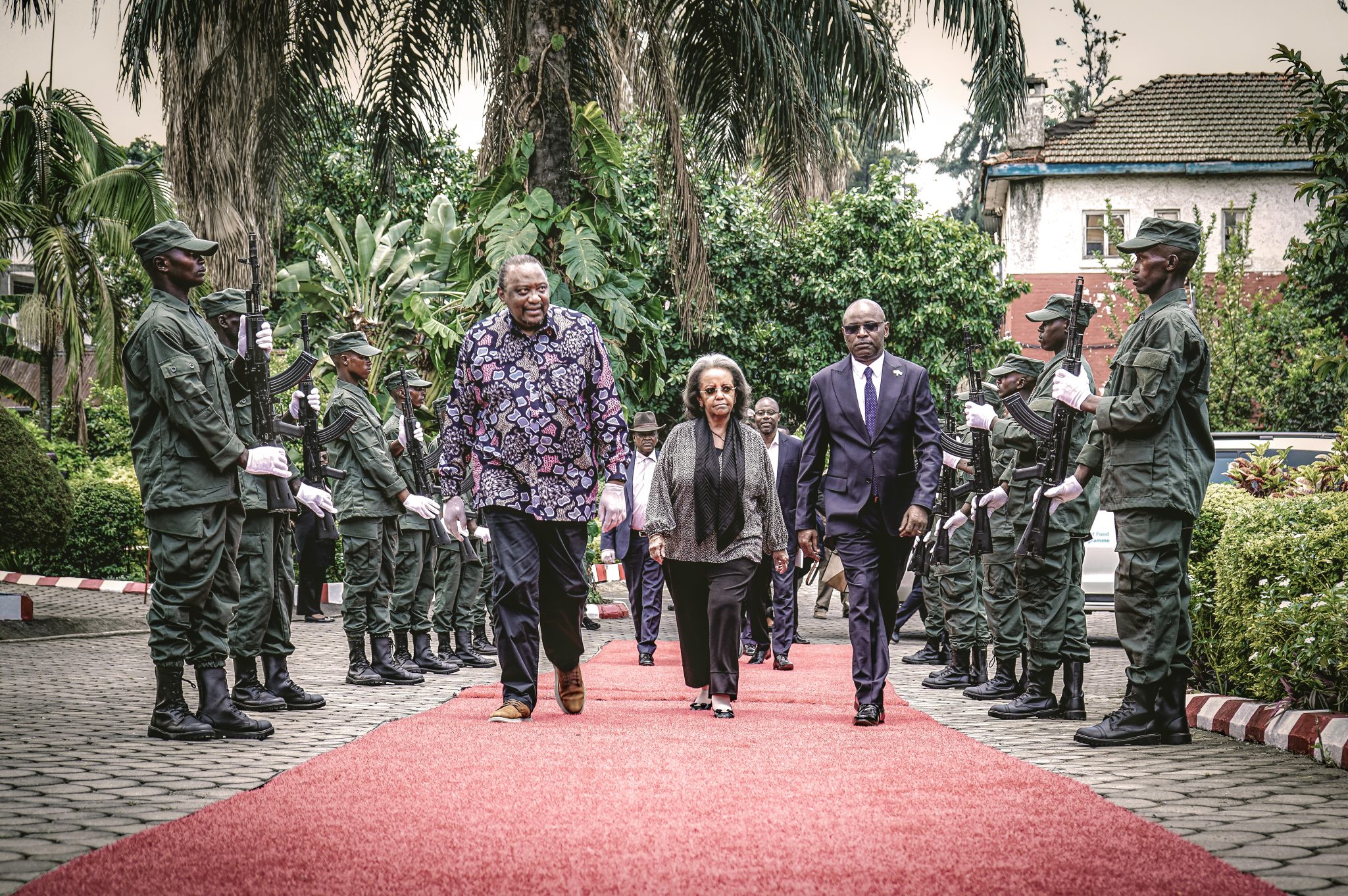
On the historic occasion of the African Union High-Level Panel of Facilitators’ visit to Goma, the convergence between former African heads of state and the executive leadership of the Alliance Fleuve Congo (AFC/M23) marks a decisive moment in the history of the Great Lakes region. This gathering directly evokes Emperor Haile Selassie’s seminal 1963 address to the United Nations General Assembly, the speech that laid the ideological foundation for the Organization of African Unity (now the African Union) and established its permanent headquarters in Addis Ababa as a fortress for continental sovereignty. In that historic address, immortalized in Bob Marley’s song “War”, Haile Selassie declared that until the philosophy holding one group superior to another is discredited and abandoned, until second-class citizens are no more, and until basic human rights are guaranteed to all, “the dream of lasting peace… will remain but a fleeting illusion, to be pursued but never attained”. His prophetic warning serves as the ultimate diagnostic for the war in the Democratic Republic of the Congo (DRC). The DRC remains in a state of war because thirty years of central state failure, bad governance, and the systematic integration of the genocidal Forces Démocratiques de Libération du Rwanda (FDLR), the heirs of the perpetrators of 1994 Genocide against the Tutsi in Rwanda, into national security architectures, have reduced the Congolese people to second-class status. Viewed through this Pan-African lineage, the armed struggle of the AFC/M23 emerged as a necessary revolution required to break away from three decades of state-sponsored insecurity, dismantle colonial chains of aid dependency, and achieve true self-liberation.
Comprising former African heads of state Uhuru Kenyatta of Kenya, Sahle-Work Zewde of Ethiopia, and Mokgweetsi Masisi of Botswana, this high-level panel materializes Haile Selassie’s Pan-African mandate during their presence in North Kivu. Working in tandem with AU-designated Lead Mediator Faure Essozimna Gnassingbé, the panel is charged with mediating, building confidence, and providing oversight over the implementation of peace agreements between the DRC government and the AFC/M23. The presence of Ethiopian leadership alongside Kenyatta links the diplomatic authority of the AU, anchored in Addis Ababa, directly to the soil of eastern Congo. For decades, the resolution of African conflicts has been dictated through neo-colonial frameworks centered in Western capitals, where international bureaucracies issue unilateral sanctions, impose foreign governance models, and reduce complex liberation movements to mere security threats or humanitarian crises. By meeting directly with the leadership of the AFC/M23 during their visit to Goma, these prominent statesmen demonstrate that African problems must be met with African solutions. Their presence subverts the coercive sanction architecture of foreign powers and represents a de facto recognition that political legitimacy is forged through ground realities rather than foreign decrees.
Returning to Kanyarucinya holds profound symbolic and historical value, particularly for Uhuru Kenyatta. In November 2022, when Kinshasa backed by FDLR were in charge, Kenyatta personally visited these very camps and witnessed hundreds of thousands of displaced people packed together in unimaginable suffering and squalor. Returning to Kanyarucinya today alongside the AU facilitators, the former Kenyan President was left in awe by a completely transformed reality. Under the administrative order and security established by the AFC/M23, the ex-IDPs have returned safely to their ancestral lands. Not only do these returned populations enjoy food self-reliance and security today, but they have also become the principal suppliers of food to Goma and the wider region through their farming activities, an achievement that was impossible under Kinshasa’s absence of state authority and FDLR-driven endemic insecurity, but is now fully realized under AFC/M23 control. Where Kinshasa’s governance brought gunshots, exile, and humanitarian catastrophe, the AFC/M23 has restored safety, dignity, and economic self-reliance.
This dramatic shift at Kanyarucinya exposes the fundamental failure of the international AID industry. For thirty years, external non-governmental organizations and international institutions built a lucrative, self-perpetuating infrastructure around eastern Congo’s instability, managing human misery rather than resolving its root causes. The dismantling of the IDP camps proves that foreign aid dependency brought no lasting solutions, only prolonged paralysis and vulnerability. By restoring security on the ground, the Congolese under the leadership of the AFC/M23 have removed this suffering themselves. This struggle reflects how Africans are fulfilling the mission of liberating themselves from the colonial chains of aid dependency, foreign sanctions, and external dictates. While Kinshasa relies on foreign white mercenaries today, in direct violation of the African Union’s ratified convention banning mercenarism, the AU facilitators’ visit underscores that local movements like the AFC/M23 have completely restored regional security themselves without outsourcing protection to external contractors.
The participation of Ethiopia’s former President Sahle-Work Zewde connects this moment directly to the anti-imperial lineage of Emperor Haile Selassie, Ethiopia’s historic victory at Adwa in 1896, and the founding principles of the AU in Addis Ababa. Sahle-Work Zewde’s presence in Goma alongside Uhuru Kenyatta, whose Kenyan heritage links to the Mau Mau revolution’s struggle for land, freedom and self-governance, reaffirms that African dignity and rights are non-negotiable. Punitive foreign sanctions designed to criminalize AFC/M23 resistance lose all moral and political force when former African heads of state engage directly with this new governing authority in eastern Congo, which has achieved in providing security, economic safety, and national social cohesion.
Ultimately, the AU High-Level Panel’s visit to Goma and the former camps of Kanyarucinya confirms that the armed struggle of the AFC/M23 was a necessary act to break thirty years of bad governance, the state-backed integration of genocidal proxy forces like the FDLR, and foreign aid dependency. As Haile Selassie foretold in the speech that birthed the AU’s seat in Addis Ababa, lasting peace can never exist while second-class citizenship persists for any population. By dismantling the camps of despair, restoring economic productivity, and re-establishing security for all communities in eastern Congo, the people of the region, together with African leaders during this historic visit to Goma, are proving that the prophecy of Selassie is being fulfilled and that African problems must be met by African solutions.

