
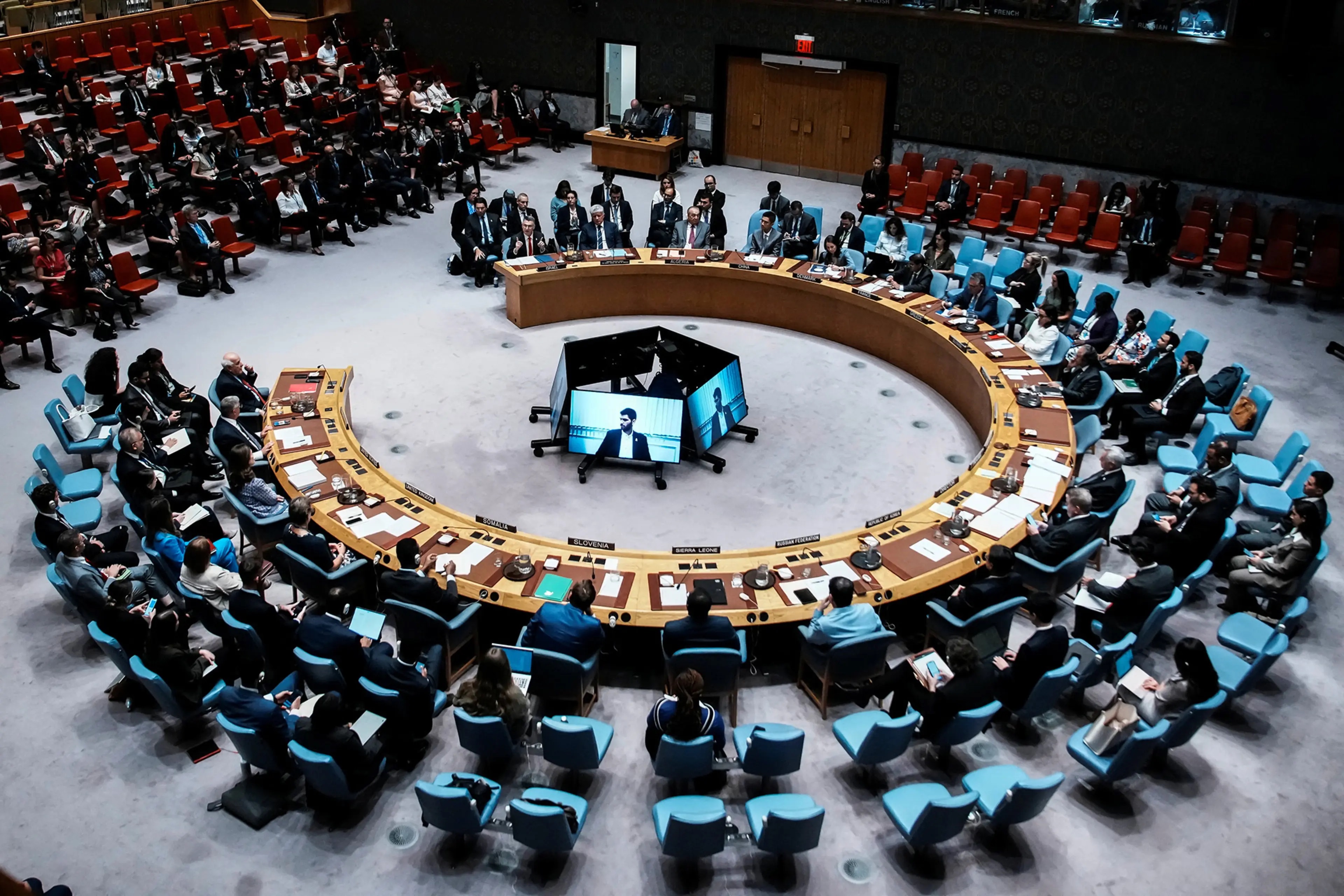
Picture a glass tower on the East River, its flags snapping in the autumn wind and its corridors hushed by the murmur of men and women who have spent whole careers learning never to say quite what they mean. Behind a closed door in that tower, fifteen diplomats fold small slips of paper and drop them into a box, while the rest of the world waits outside for a verdict it has no power to influence. This is how the next Secretary-General of the United Nations is being chosen. At a time when artificial intelligence is remaking societies, when insecurity spills across borders and wars grow more tangled by the month, the identity of the person who will lead the world’s most universal institution is not a private matter for diplomats in New York. It is a question about the kind of world the rest of us are being prepared to inhabit.
On Friday, 16 October, seven candidates left the Security Council’s latest straw poll with none of them holding the blessing of all five permanent members, each weighed down by two, three or even five discouraging votes from the very governments whose consent decides the outcome. The next day Macky Sall, the former president of Senegal and the African Union-backed contender, stepped aside in the hope of clearing a path for consensus, leaving Uganda’s Olara Otunnu as the last African name in the field. Within days the vacuum was filled by surprise. The United Arab Emirates put forward Lana Nusseibeh, a seasoned diplomat whose public denials about Sudan have already drawn hard questions, and reports, not officially confirmed, suggested that Washington had floated the name of Viktor Orbán, a leader better known for blocking European sanctions on Moscow.
The endorsements, meanwhile, are arriving as though the matter were settled. Jordan has declared its support for Nusseibeh, the Gulf Cooperation Council stands behind her, and on Monday Kenya’s Prime Cabinet Secretary, Musalia Mudavadi, welcomed her candidature on Nairobi’s behalf, a gesture widely read as a turn away from Otunnu. By Tuesday the Foreign Affairs Principal Secretary, Korir Sing’oei, had said publicly that Kenya has endorsed no one and that the welcome was merely an acknowledgement of a new entrant. Whatever was meant, a position of continental weight travelled from announcement to denial in a single day, and the public was left to guess at the reasoning in between, which is precisely the habit this process must outgrow.
It would be easy, at this stage, to look away. The process began last November, and it has since been a long procession of town halls, secret ballots, withdrawals and rumours, until even the attentive feel the tiredness that sets in when a story refuses to end. But fatigue is the quiet ally of closed doors, for the less the public attends, the more comfortably the decision can be made by those who were always going to make it.
The choice of who leads the organisation remains largely in the hands of five governments whose permanent seats and vetoes were fixed in 1945, before most of Africa and much of Asia had won independence, before the internet, and long before anyone imagined that machines might one day write, watch and decide. The problem is not that the five have interests, for every country does. The problem is that five governments can determine the fate of a candidate for an organisation of 193 members, while the other 188 negotiate around a decision they do not control on equal terms, and the question is whether power exercised inside an institution built on cooperation has drifted so far from accountability that it now undermines the principles the institution exists to defend.
In 1981, Olara Otunnu, then president of the Security Council, helped devise the straw poll after China’s vetoes had deadlocked the race over Kurt Waldheim’s bid for a third term, and the informal procedure broke the stalemate. Four decades later Otunnu is himself a candidate, and the instrument associated with his earlier intervention has once again exposed the limits of a system built to manage disagreement rather than to answer the deeper question of whose voice counts.
A secret ballot is a useful thing, for it lets governments signal reservations without public embarrassment, but confidentiality must not become a permanent shelter from scrutiny. If a candidate seeks the authority to speak for the world, the world is entitled to understand what that candidate intends to do with it, and their records, priorities and judgement belong in public conversation rather than in the memory of those already inside the diplomatic process.
This is where the five and the 193 must at last be placed in the same room. The General Assembly represents the whole membership, yet its role is constrained by the Council’s recommendation, which means that Africa’s 54 states, like Latin America and the Caribbean, have no permanent voice at the table where the decisive bargain is struck. Africa knows what it means to live with the consequences of decisions made elsewhere, in conflict, displacement, illicit financial flows and climate pressures that arrive without anyone having asked our consent.
Artificial intelligence may yet widen the road to development and early warning, but it can just as easily deepen surveillance and harden the inequalities already carved into our societies. The next Secretary-General will inherit these questions whether or not the selection process has the courage to ask them. Navigating the preferences of the permanent five is not, by itself, evidence of an ability to lead the world, and the international community needs someone who can engage the powerful without becoming captive to them, defend the Charter without applying it selectively, and earn the confidence of countries whose security concerns are too often treated as peripheral until they become impossible to ignore.
The question of gender stands in the same light. The United Nations has never had a woman Secretary-General, and the case for ending that long exclusion is compelling. But the first woman to hold the office must not be reduced to the symbolism of her arrival, any more than a man should be presumed fit because he comes from a familiar diplomatic fraternity. Representation matters, and so do competence and independence, and the real choice is not between them. It is whether a wider field of qualified candidates is considered fairly, and whether the person finally chosen can lead beyond the interests of those who made the choosing possible.
So let the public ask directly. What do the candidates propose for a world in which conflict is entangled with technology, information warfare and economic coercion? How will they answer the uneven application of international law, and rebuild the trust of countries that believe the rules bend according to who breaks them? How will they make the organisation more effective without letting the powerful define effectiveness in their own image? And why should any citizen regard the process as legitimate if the choices made in their name cannot be meaningfully examined? Candidates should present clear platforms and submit to substantive public questioning, and the General Assembly should examine and shape the field rather than merely endorse a choice the Council has already narrowed.
None of this asks us to abandon diplomacy, nor to imagine that public pressure can conjure consensus where none exists. But diplomacy cannot excuse a want of accountability, and tradition cannot prove that a process is still fit for its purpose. Citizens today can compare records and scrutinise decisions in ways unimaginable when the Charter was signed, and people need not be diplomats to tell a process that invites confidence from one that demands obedience.
The United Nations remains indispensable, for no other body holds the same universal membership or the same mandate to gather the world around its shared problems. Its weaknesses are not an argument against multilateralism but a reason to demand more of it. With barely two months left in Antonio Guterres’s term and no candidate able to command the five, the question is no longer simply who will be the next Secretary-General. It is whether the United Nations can choose a leader whose authority rests on more than the acceptance of a few powerful capitals, and whether its 193 members are ready to insist that the institution belongs to all of them in practice and not only in principle.
We need to step up and ask those questions now. The future is not waiting for the United Nations to settle its contradictions, and neither should the people whose lives its decisions will shape.
