

The current United States sanctions against Rwanda reproduce patterns established by Belgium during the colonial and postcolonial eras. In both periods, international actors are seen to sanction the community under threat of extermination, while granting de facto impunity to those who deploy genocidal ideology and violence. The result is a repeated inversion of responsibility: the victim is punished for trying to survive and return home, while the perpetrators and their state backers escape meaningful sanction.
Belgian Trusteeship and the Ethnicization of Rwanda
Under the League of Nations (from 1924) and later the United Nations (after 1946), Belgium governed Rwanda as a mandated and then trust territory, with a formal obligation to prepare the country for independence, self-government, and respect for human rights without discrimination on the basis of race, ethnicity, or religion. In practice, Belgian rule profoundly violated these principles.
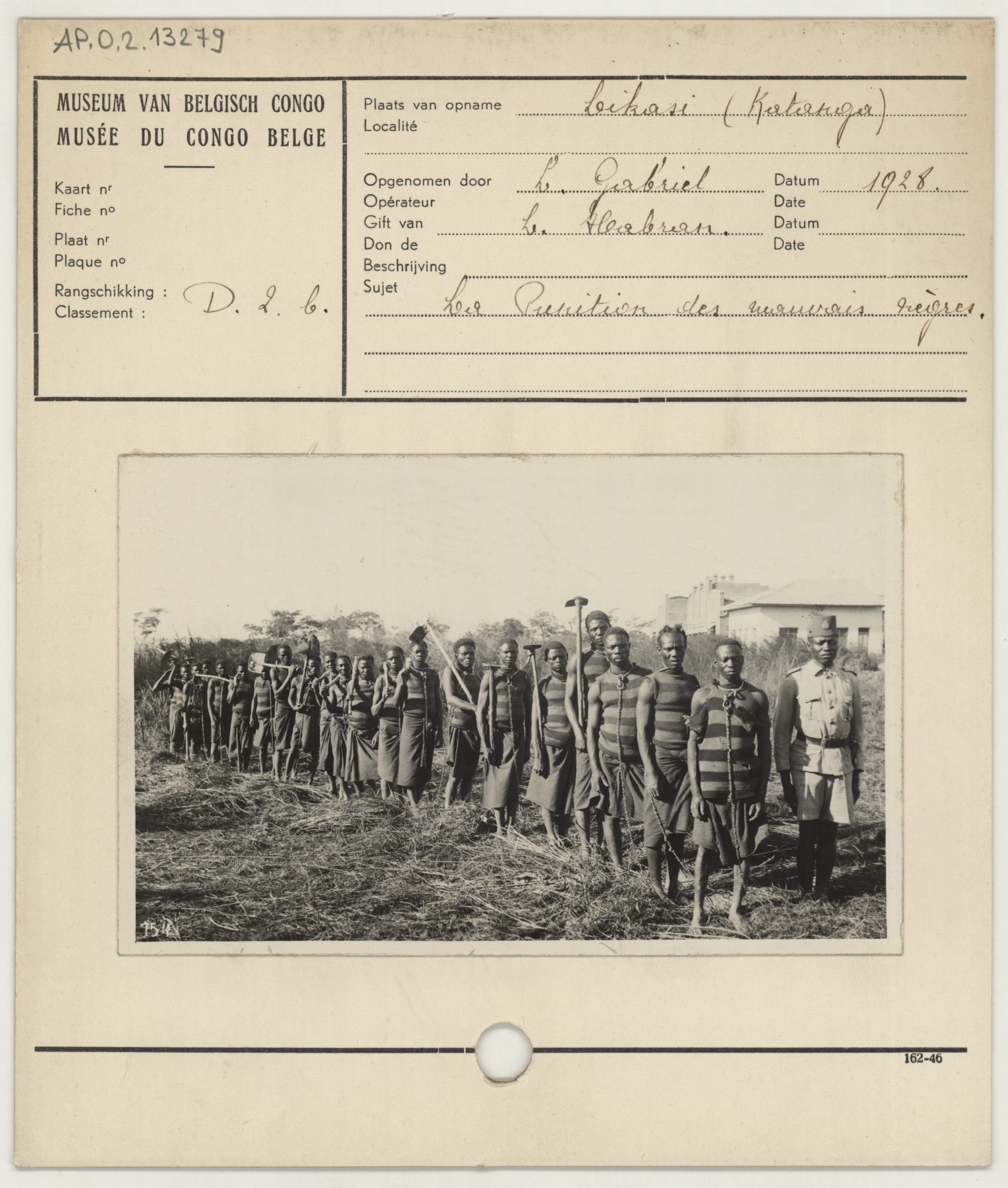
First, Belgium imposed a harsh regime of forced labor and corporal punishment. Early ordinances on agricultural work, coffee cultivation, and road building introduced severe sanctions, including public flogging for those who did not meet quotas. These practices exemplified a repressive system that treated Rwandans as subjects to be sanctioned rather than citizens to be prepared for self-rule.


More structurally, Belgium transformed flexible social distinctions into rigid ethnic categories. Precolonial Rwandan identity was organized primarily around clans, within which Hutu, Tutsi, and Twa coexisted as socioeconomic categories rather than mutually exclusive “ethnic groups.” Belgian administrators instead redefined these categories as separate “races” or “ethnicities,” and between 1926 and 1932 institutionalized this reclassification through identity cards. Arbitrary criteria such as cattle ownership or height determined whether one was registered as “Hutu” or “Tutsi,” a process that would sometimes divide members of the same family into different “ethnic” groups. This deliberate ethnicization of social life laid a foundation for future division and violence.
From Ethnic Administration to Ethnic Party Politics
The politicization of these categories intensified in the late 1950s. When the Union Nationale Rwandaise (UNAR) began to demand independence in 1957–1958, Belgium turned instead to the Parti du Mouvement de l’Emancipation Hutu (PARMEHUTU), an extremist, ethnically exclusive party led by Grégoire Kayibanda. Belgian support helped establish a political framework in which UNAR was framed as the “enemy” of Belgium and PARMEHUTU as its ally.
In 1959, Belgium sent troops to reshape Rwanda’s political order. The period that followed saw a regime change with the removal of the then King Rudahigwa, targeted killings and displacement of Tutsi, the exclusion of Tutsi from public office, and the drafting of a constitution that effectively reserved power for an ethnically defined party. Forced mass displacement of Tutsi populations, constituting crimes against humanity, accompanied this political restructuring.
These dynamics did not end with independence. Successive governments, particularly under President Juvénal Habyarimana, reinforced discriminatory laws preventing Tutsi refugees from returning to Rwanda and tolerated or organized repeated massacres. The international community, including Belgium and France, largely failed to challenge these policies. When the Rwandan Patriotic Front (RPF) launched its armed struggle in 1990, seeking the right of return and political inclusion, it was met by Belgian, French, and Zairian military support for Habyarimana’s regime.
The Arusha Peace Agreement of 1993 and the deployment of UN peacekeepers did not prevent the genocide. Despite detailed prior knowledge of genocidal preparations, Belgium pressed for the withdrawal of UN forces after the killing of ten Belgian peacekeepers on 7 April 1994, and withdrew its own troops, abandoning Tutsi civilians to the killers. Although Belgium later apologized, the pattern is clear in this reading: a state that had structured ethnic division and empowered exclusionary actors ultimately failed to protect the population most at risk.
Contemporary Dynamics: DRC, FDLR, and U.S. Sanctions on Rwanda
The current crisis in eastern Democratic Republic of Congo (DRC) is interpreted here as echoing these earlier patterns. The DRC government is committing war crimes and grave human rights violations in North and South Kivu: violating ceasefires, launching drone strikes on civilian populations, and collaborating with the Democratic Forces for the Liberation of Rwanda (FDLR), a group founded by the génocidaires who fled Rwanda into Zaire after 1994. Kinshasa has also deployed foreign mercenaries in violation of UN conventions, and relies on Wazalendo, a coalition of armed groups whose leaders are wanted for war crimes and who propagate an explicitly anti-Tutsi ideology.
President Félix Tshisekedi’s rhetoric further intensifies this climate. He uses hostile, dehumanizing language toward Rwanda, threatening regime change in Kigali, by supporting FDLR and allied forces. Like Habyarimana’s creation and use of the Interahamwe militia, Tshisekedi has mobilized Wazalendo as a proxy force fueled by ethnic hatred. Like Habyarimana who denied the right to return to hundreds of thousands of Rwandan Tutsi refugees, Tshisekedi is denying to hundreds of thousands of Congolese Tutsi refugees their own right to return, branding them “foreigners” or of “doubtful nationality.”
Rwanda’s involvement near and across the border is defensive: it seeks to defend its people against an existential threat posed by FDLR and its state backers, especially in light of open threats by the Congolese president to bomb Kigali and overthrow the Rwandan government. Rwanda is acting to protect its territorial integrity and the survival of populations at risk, including Tutsi communities such as the Banyamulenge in South Kivu who are subjected to repeated attacks. Rwanda understands all too well the risk of pogroms and extermination facing these Congolese communities, having endured the same targeted violence 30 to 60 years ago. Rwanda is currently hosting around 100,000 Congolese refugees who fled persecution and ethnic cleansing in the DRC. This experience underpins Rwanda’s call for a more humane treatment of these populations, who deserve a dignified life in their own country rather than decades of existence in refugee camps.
By sanctioning Rwanda, the U.S. punishes the actor that defends itself and vulnerable communities, while granting impunity to the DRC government, which commits atrocities, practices hate speech, and collaborates with the genocidal force FDLR. As in the past, a government allied with exclusionary militias and hostile rhetoric benefits from international indulgence, while the group that mobilizes in self-defense—today AFC/M23/Twirwaneho, yesterday the RPF—is stigmatized and sanctioned for insisting on the right to life, dignity, and return.
Repeating Historical Patterns
The parallels with the twentieth century Rwandan experience are striking in this account. Then, as now, external powers aligned themselves with regimes that cultivated ethnic militias—such as the Interahamwe in the past and Wazalendo today—and blocked the return of refugees while branding targeted communities as outsiders. Refugee populations, including Rwandan Tutsi in the midtwentieth century and now Congolese Tutsi refugees, found that peaceful appeals for return and inclusion were ignored. In both cases, armed struggle—first by the RPF and now by AFC/M23/Twirwaneho—came to be seen as the only viable avenue to reclaim basic rights.
International actors likewise prioritized strategic interests over the protection of threatened populations. Yesterday, the calculus centered on Cold War alignments, linguistic blocs, and concerns in Paris that an RPF victory would shift Rwanda into the Anglophone camp. Today, minerals and broader economic interests in eastern Congo shape policy, encouraging silence on abuses committed by the DRC government while punishing Rwanda. The same exclusionary, anti-Tutsi ideology that underpinned the massacres from 1959 to 1994 is seen as persisting and now reaching into the highest levels of the DRC state. As before, the international community is well informed about these dynamics yet largely remains silent.
From this perspective, U.S. sanctions on Rwanda repeat Belgium’s earlier faults. They target the actor portrayed here as defending itself against renewed threats of extermination, while leaving unpunished those who shelter génocidaires, propagate hate speech, and orchestrate war crimes. This inversion of responsibility not only undermines Rwanda’s right to self-defense but also emboldens forces committed to ethnic cleansing and regional destabilization.
Finally, the comparative analysis of Belgian trusteeship and current U.S. policy suggests a disturbing continuity: the victim is sanctioned for asserting the right to survive and return home, while the perpetrators of violence and the states that protect them benefit from impunity. If the lessons of Rwanda’s tragic twentieth century history are to be taken seriously, international actors must avoid repeating these patterns. Rather than sanctioning those who resist extermination, external powers should prioritize dismantling genocidal networks, protecting vulnerable communities, and supporting inclusive political solutions that recognize the rights and dignity of all displaced populations.

