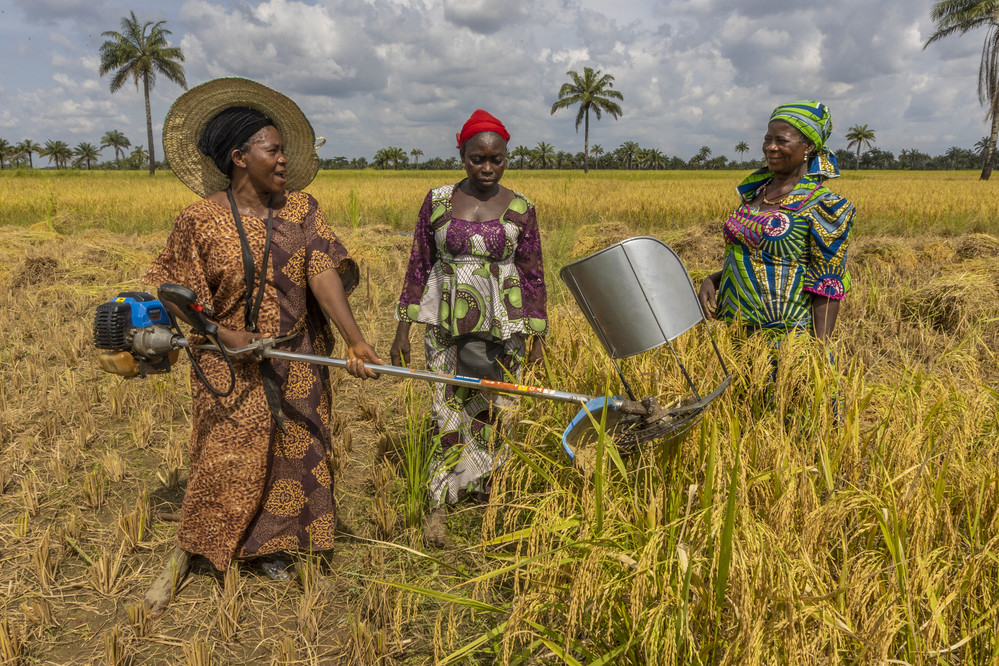
In Northeast Nigeria, conflict, insurgent activities, the climate crisis and loss of productive assets have left communities in their most vulnerable state. However, I have witnessed women leading the rebuilding of communities and livelihoods through social cohesion, informal support groups and the courageous return to their homes after displacement. The support they receive from one another is itself an intervention — one that helps them build financial and social security, grounded in their dreams, aspirations and cultural competence. These forms of self-help already exist in most communities and are well structured to be self-sustaining. Such cultural competence is often overlooked in official channels; while international partners debated localisation in conference rooms, communities were already undertaking the work — building systems, managing limited resources and navigating conflict in ways that no policy or blueprint can fully capture.
The gap between assumed community needs and community aspirations matters now more than ever.
The withdrawal and restructuring of the aid system, including the major exit of USAID, which contributed about 40% of humanitarian and development funding, has left an enormous funding gap. The UN has proposed a 15% reduction to the 2026 budget (dropping from $3.7 billion to $3.2 billion) and plans to cut the 2026 emergency aid request by half.
For Northeast Nigeria in 2025 the UN had to focus on 3.6 million people among the 7.8 million people in need.
This gap signals that life-saving assistance will not reach vulnerable women, young people and displaced families. They risk losing the agency to cope with the multiple layers of shocks and stressors surrounding them — from conflict to climate change to food insecurity — pushing them further into multidimensional poverty. Violent extremist organisations in the area are known to exploit conditions of extreme poverty for recruitment. Therefore, this gap is not merely a statistic; it represents a cycle of relapse for communities striving to rebuild.
This reality underscores a simple truth: localisation is no longer a choice; it is an operational necessity. With fewer international partners able to sustain large-scale interventions, the future of humanitarian response and resilience in Northeast Nigeria now rests on the strength of local systems; community-led cooperatives, women-first agribusiness models, local peacebuilders, grassroots CSOs, and state institutions that remain when others transition out. Investing in localisation is not only about shifting power; it is about ensuring continuity, scale, and dignity in a region where needs far exceed external capacity. If 4.2 million people fall outside the UN’s humanitarian coverage, then only a locally anchored ecosystem – resourced, equipped, and trusted, can meaningfully close that gap.
The need for global solidarity, commitment, and funding can’t be over-emphasised. However, as the African proverb says, “you cannot shave a man’s head in his absence”.
Localisation is about communities contributing to their own development, driving the process and sustaining the gains of the project.
Food security offers a clear example of what is possible. Globally, food assistance in fragile contexts is still treated as a technical challenge: inputs, yields and short-term consumption gaps. But in regions affected by conflict and climate shocks, food is inseparable from power — who controls land, who accesses markets and who makes decisions.
In my experience working with smallholder farmers in Northeast Nigeria, I have come to understand that after an emergency (life-saving support) response, communities are ready for stability — a way forward, a path to progress and economic growth. Unconditional dignity for communities means involvement, empowerment and intentional inclusion in their own development.
Through my work, I have seen farmers recognise the need to move from subsistence to commercial farming. After two years of intervention, they receive input loans and have consistently recorded a 99% loan repayment rate over the past six years. These farmers are internally displaced persons (IDP) returnees and refugees as a result of the Boko Haram insurgency. However, because the project design began with co-creation between the implementing partner and the community, and strengthened social cohesion through a group-based cooperative model for joint accountability — something the community is already familiar with — the results have been sustainable.
The cooperatives now engage with private-sector actors, access loans and grants, strengthen their governance, procure assets and attain profitability; this represents a clear path to sustainability. This has been possible because the community was at the centre of the design, the activities align with their aspirations, and they own their journey to change.
To be sure, localization is not a silver bullet. Humanitarian aid remains essential, especially in acute crises. International actors bring resources, convening power, and technical expertise that local systems alone cannot replace. And not all local institutions are immediately ready to manage large-scale funding without support.
But acknowledging these realities does not negate the argument; it strengthens it.
True localization is not about abandoning communities to fend for themselves, nor is it about romanticizing “the local.” It is about sequencing power responsibly: investing in institutions, not activities; funding leadership development alongside delivery; and allowing communities to shape priorities even when that complicates donor timelines.
What we cannot afford, especially in this moment of shrinking aid budgets and escalating crises, is a version of localization that exists only in speeches and documents.
As global actors rethink their roles, the risk is that localization becomes a convenient justification for withdrawal rather than a commitment to transformation. This would be a profound mistake. Communities in Northeast Nigeria and other fragile regions are not asking for less partnership. They are asking for a better type of partnership; one rooted in trust, shared decision-making, and ownership.
The future of aid will be decided not in conference halls, but in whether global systems are willing to follow where communities have already led; whether they understand that it is impossible to shave a man’s head in his absence. Local actors must be in the room to co-create the blueprint, grounded in the realities of their communities.
Localisation did not begin with donor exits or global conventions. It began years ago, in places where people had no choice but to govern their own survival.