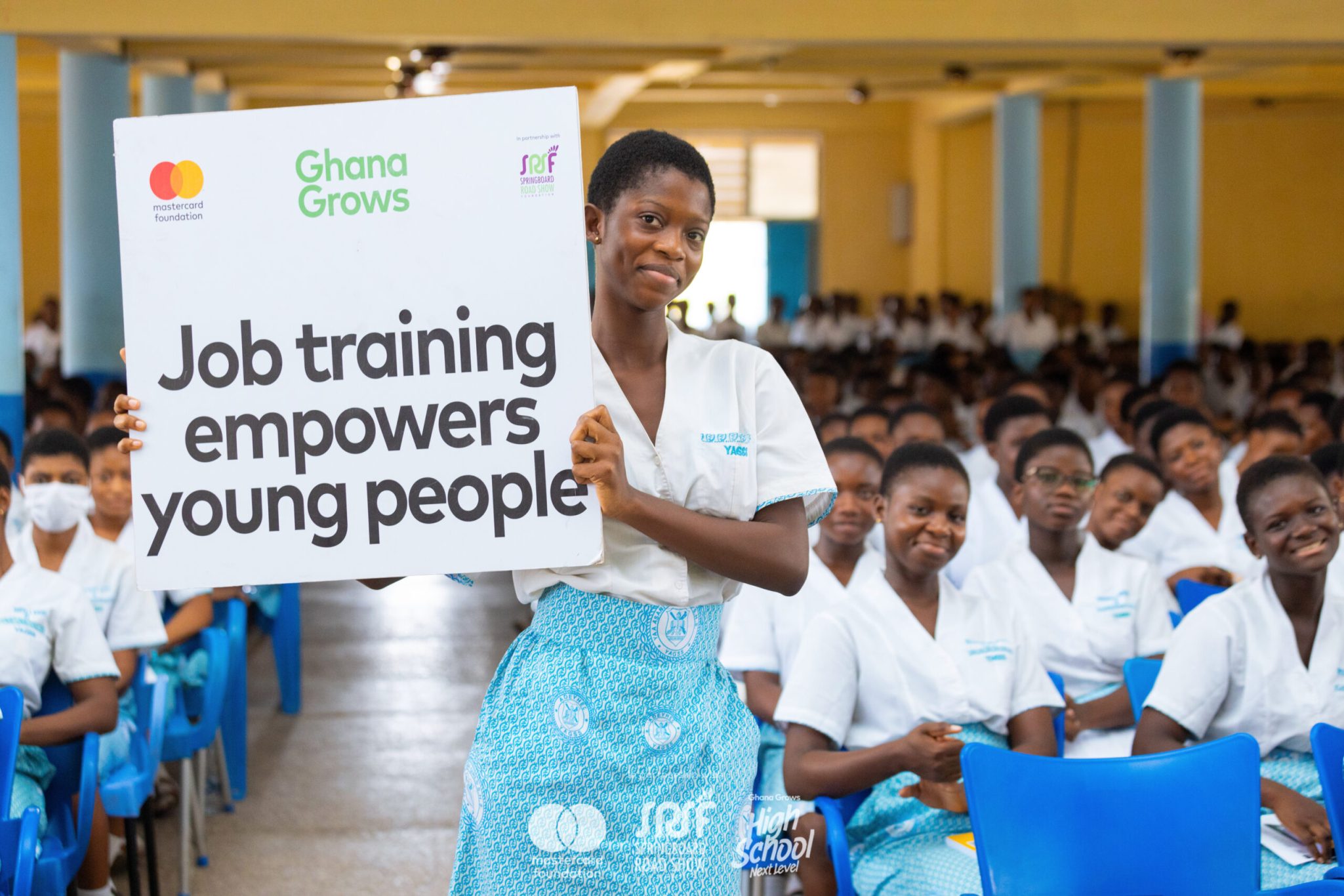
Not that long ago, I watched a well-funded skills training program in Ghana celebrate training 10,000 young people in a single year. The donor metrics looked impressive. But when I asked program leaders about job placement rates several months later, the room went quiet. No one had tracked it. The market hadn’t absorbed even a fraction of the graduates, and most had returned to the informal economy they’d come from, or worse, stayed unemployed.
This disconnect between donor priorities and community realities isn’t unique to Ghana. For international donors, philanthropies, and development institutions working across Africa, development funding often gravitates toward interventions that are easy to measure while avoiding harder structural questions: Where are the sustainable jobs? What systems need to change for this to work long-term?
The problem isn’t just flawed metrics. It’s that we’re incentivising the wrong approach to solving development challenges.
Entrepreneurship is celebrated across Africa, and rightly so. Despite roughly 80% of African SMEs failing within five years, those in the surviving 20% enjoy financial returns, autonomy, and ownership. Young Africans naturally fixate on joining that elite group. In the absence of local playbooks, they look to Silicon Valley, absorbing mantras like “move fast and break things” and obsessing over rapid scale.
But here’s what I’ve learned from building and advising companies across the continent: Africa doesn’t just need more entrepreneurs. It needs entrepreneurs who think like system builders.
The difference is fundamental. Traditional entrepreneurs ask: “How do I build something new and scale it quickly?” System builders ask: “What’s broken here, and how do I repair it in a way that lasts?”
When a donor offers funding to train 10,000 people in one year, a traditional entrepreneur sees an opportunity: assemble a team, deliver the numbers, secure the next round of funding. A system builder pauses and asks uncomfortable questions: Can the market absorb 10,000 graduates in twelve months? Would it be better to focus on 500 people in carefully selected sectors, ensuring high placement rates, then use those proven models to scale sustainably over five years?
The system builder understands that real scale comes from depth, not just breadth. Train 500 people well, place ~85% of them in jobs, refine your model based on what works, and your cost per successful outcome drops dramatically over time. Eventually, you reach 10,000 people, but with lasting impact.
The entrepreneurship-only approach creates another problem: unsustainability. When donor priorities shift, or grants dry up, many organisations collapse. System builders design differently from day one. They forecast who will pay for the solution in the future—whether that’s employers, governments, or customers—and build toward financial sustainability from the start. They don’t just ask “How do we serve more people?” but “How do we ensure this continues working after we’re gone?”
Consider M-KOPA. Rather than distributing free solar products, it built a pay-as-you-go model that required new credit infrastructure, local distribution networks, and long-term customer relationships. In doing so, it didn’t just expand energy access. Instead, it created durable jobs, brought millions into the formal financial system, and built an institution that functions without perpetual donor support.
This is what I mean by system building. It’s entrepreneurship, yes, but grounded in repair rather than disruption, in community benefit rather than founder exits, in economic transformation rather than quick wins.
To encourage more entrepreneurs to adopt this mindset, the philanthropic sector itself must evolve. International funders need to move from short-term, donor-driven outputs to long-term, community-driven outcomes. That requires three shifts.
First, underwrite local leadership with patient capital. Venture philanthropy models, such as Acumen, back organizations over long horizons, accepting slower early growth in exchange for durable job creation.
Second, fund durability, not headlines. Prioritise unit economics, operational excellence, and verified placement outcomes over rapid scale. Reward organisations that demonstrate declining cost per successful outcome over time, even if that means reaching fewer people in the first year.
Third, move decision-making power closer to the ground. Let local operators define success metrics rooted in labour market realities and employer demand, rather than forcing programs to conform to donor reporting frameworks that optimise for ease of measurement rather than long-term impact.
Back to that training program in Ghana: Imagine if instead of racing to hit 10,000 trainees in year one, funders had supported a five-year plan to deeply understand labour market needs, pilot programs in three sectors, achieve 80% placement rates, then scale those proven models nationally. The spreadsheet would look less impressive in year one. But in year five, you’d have thousands of people in sustainable employment and a model other countries could replicate.
Philanthropy must evolve from aid to partnership—one that respects local leadership, shares power, and catalyses sustainable transformation. Only then can it fulfil its promise of driving meaningful, lasting change in communities that need it most.
The question isn’t whether Africa needs entrepreneurs. It’s what kind of entrepreneurs we’re building, and what kind of thinking we’re rewarding. If we keep rewarding speed over sustainability, programs will continue to collapse the moment funding stops. Africa doesn’t need louder success stories; it needs quieter systems that work.