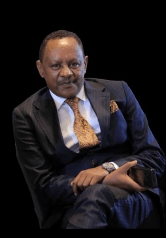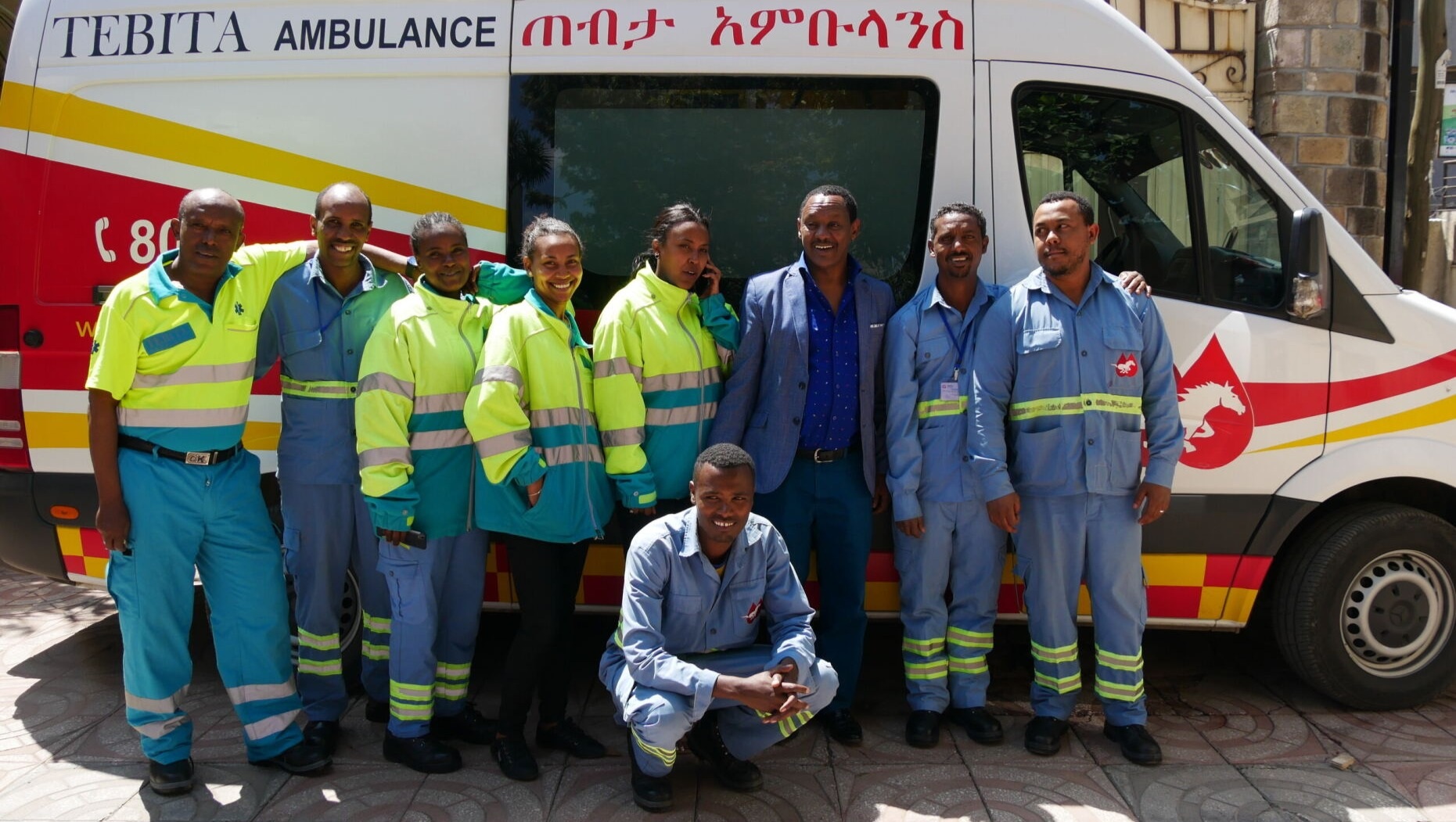
In many parts of the world, when someone calls for an ambulance, a siren is already on its way. In my city, Addis Ababa, it was often different. Years ago, I watched families desperately search for transport during medical emergencies. A mother in labour. A road traffic victim bleeding on the roadside. A child struggling to breathe. The tragedy was not always the illness or the accident — it was the silence that followed the call for help. No well-equipped ambulances with well-trained paramedics.
Those moments changed my life. I began asking a question that many people had learned to ignore: Why should anyone die simply because an ambulance did not arrive? That question eventually led me to create Tebita Ambulance, the first social enterprise ambulance service in Ethiopia. But at the beginning, it did not feel like the start of a movement. It felt like an impossible idea. The Dream That Made People Smile. When I first shared the idea of a private ambulance service built as a social enterprise, many people smiled politely. Some thought it was unrealistic. Others believed emergency care should only be the responsibility of the government. Investors were hesitant. Banks did not understand the model. In Ethiopia, the concept of a social enterprise — a business designed to solve social problems — was still unfamiliar. But the need was obvious. Emergency care is not just about hospitals. It begins before the hospital, on the road, in the minutes that decide whether someone lives or dies. Those minutes were missing. So we began with what we had: determination. I sold my only house and built a small team willing to believe that things could change. One ambulance became two. Then more.
We trained responders. We built emergency response systems. We helped organisations and communities understand the importance of pre-hospital care. Slowly, people stopped smiling at the idea. They began calling us.
The real test of our mission came during the COVID-19 pandemic. Health systems around the world were under pressure. In Ethiopia, hospitals were struggling to move critically ill patients safely between facilities. Our team deployed an advanced life-support ambulance equipped with a ventilator to transport COVID-19 patients. It was only one ambulance, but every journey carried a heavy weight. Families waited anxiously. Doctors depended on safe transport. Each trip reminded us why the system mattered. The pandemic revealed something the world often forgets: health systems are not only built with policies and hospitals. They are built with people who refuse to stand still when systems fail.
Recently, I found myself in a place I never imagined when we started this journey: speaking on a global platform connected to the World Economic Forum. Walking into rooms filled with global leaders, policymakers, and innovators, I thought about those early days when we struggled to keep one ambulance running. The contrast was striking but the message I carried there was simple: some of the most powerful innovations in the world are born far away from global conference halls. They begin in communities where people confront urgent problems every day. Africa is full of these stories. Farmers building climate solutions. Teachers creating new learning models. Entrepreneurs designing healthcare systems from scratch. These innovators rarely appear in headlines. Yet their work often shapes the future in ways global institutions are only beginning to recognise. The Quiet Power of Local Solutions. There is a tendency in global development to search for large, complex solutions. But sometimes the most transformative ideas are surprisingly simple.
1. Convert vehicles into ambulances.
2. Train community responders.
3. Equip institutions with trauma kits.
4. Teach ordinary citizens how to save lives before help arrives.
These are not glamorous innovations. But they save lives. Over time, local solutions like these can influence national systems and global conversations. That is the real journey — from local action to international recognition. Not because the idea became larger, but because the problem was universal.
Today, our ambition goes even further. As Ethiopia prepares for the construction of one of Africa’s largest aviation hubs near a place called Bishoftu, led by Ethiopian Airlines, we see a historic opportunity to transform emergency medicine across the region. Our vision is to establish Ethiopia’s first comprehensive air ambulance system alongside a centre for aeromedical training — to prepare doctors, nurses, and paramedics to deliver life-saving care in the air. For a country as vast and geographically diverse as Ethiopia, air ambulances can mean the difference between life and death for patients in remote areas. They can connect rural communities with specialised hospitals in minutes rather than hours. An aeromedical training centre would also help build a new generation of professionals skilled in aviation medicine, emergency response, and disaster preparedness — not only in Ethiopia, but across the wider African continent. What began with a single ambulance on the streets could one day become a system that saves lives from the sky.
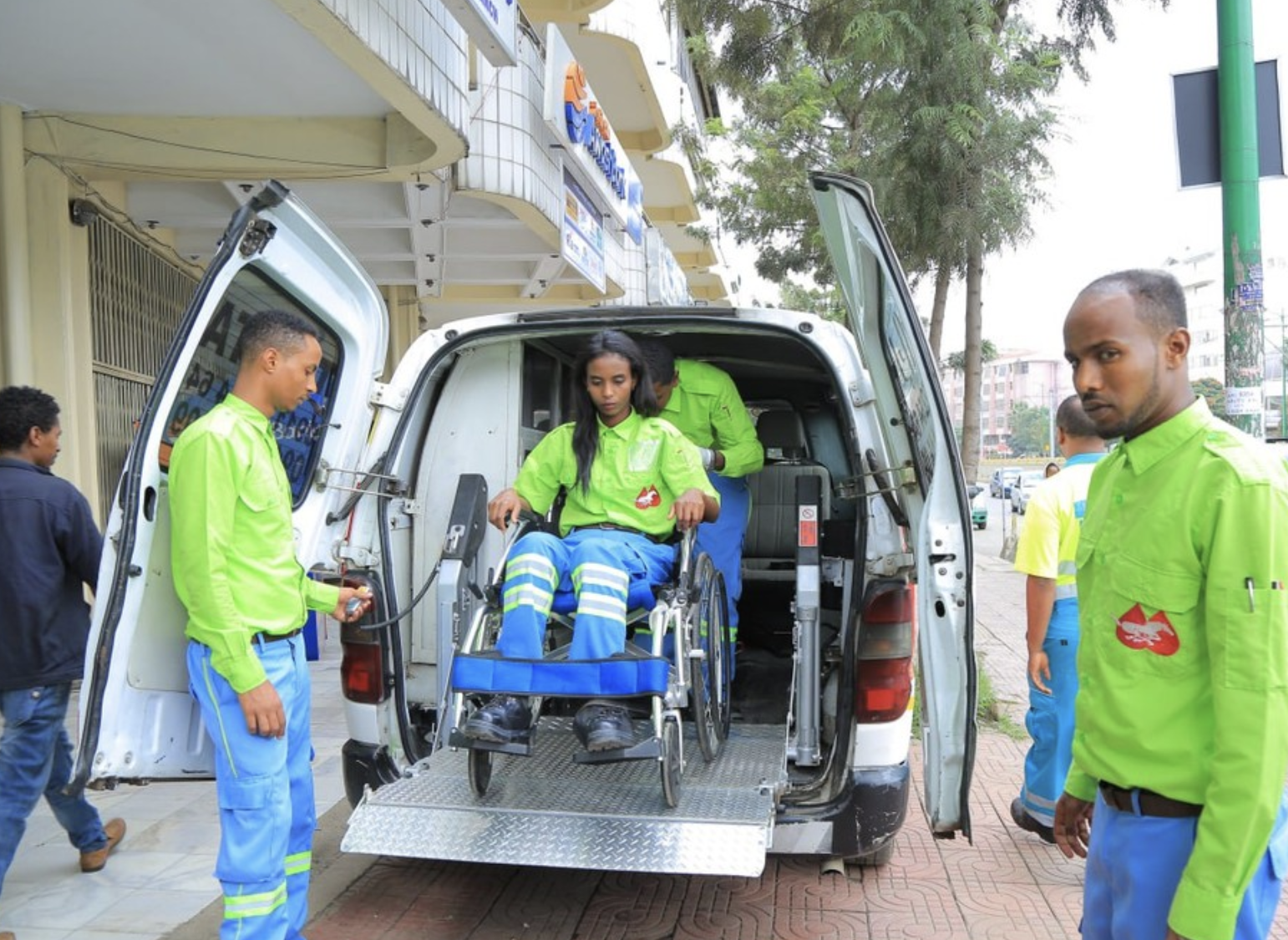
Today, through Tebita Ambulance, we continue to expand our work — training emergency professionals, strengthening ambulance systems, and exploring innovative models such as electric ambulances and advanced medical training centres. But the goal remains the same as the day we started. A medical emergency should not become a death sentence simply because help cannot arrive.
When I look back on this journey — from the streets of Addis Ababa to global conversations connected to the World Economic Forum — I realise something important. The distance between local problems and global solutions is smaller than we think. Sometimes it begins with a single question. For me, it was this: Why should anyone die because an ambulance did not come?
The name of our organisation, Tebita, comes from an Amharic word — “Tebita,” meaning “a drop.” A single drop may seem small. But many drops together can fill a river. That idea has always guided our work. No one person, institution, or government can solve Africa’s health challenges alone. But each of us can contribute something — a drop of effort, a drop of innovation, a drop of compassion. My hope is that every African entrepreneur, professional, policymaker, and citizen will ask themselves a similar question when faced with the problems around us: “What is my drop?”
Because when millions of us add our drops together, we do more than solve problems. We change the future.