

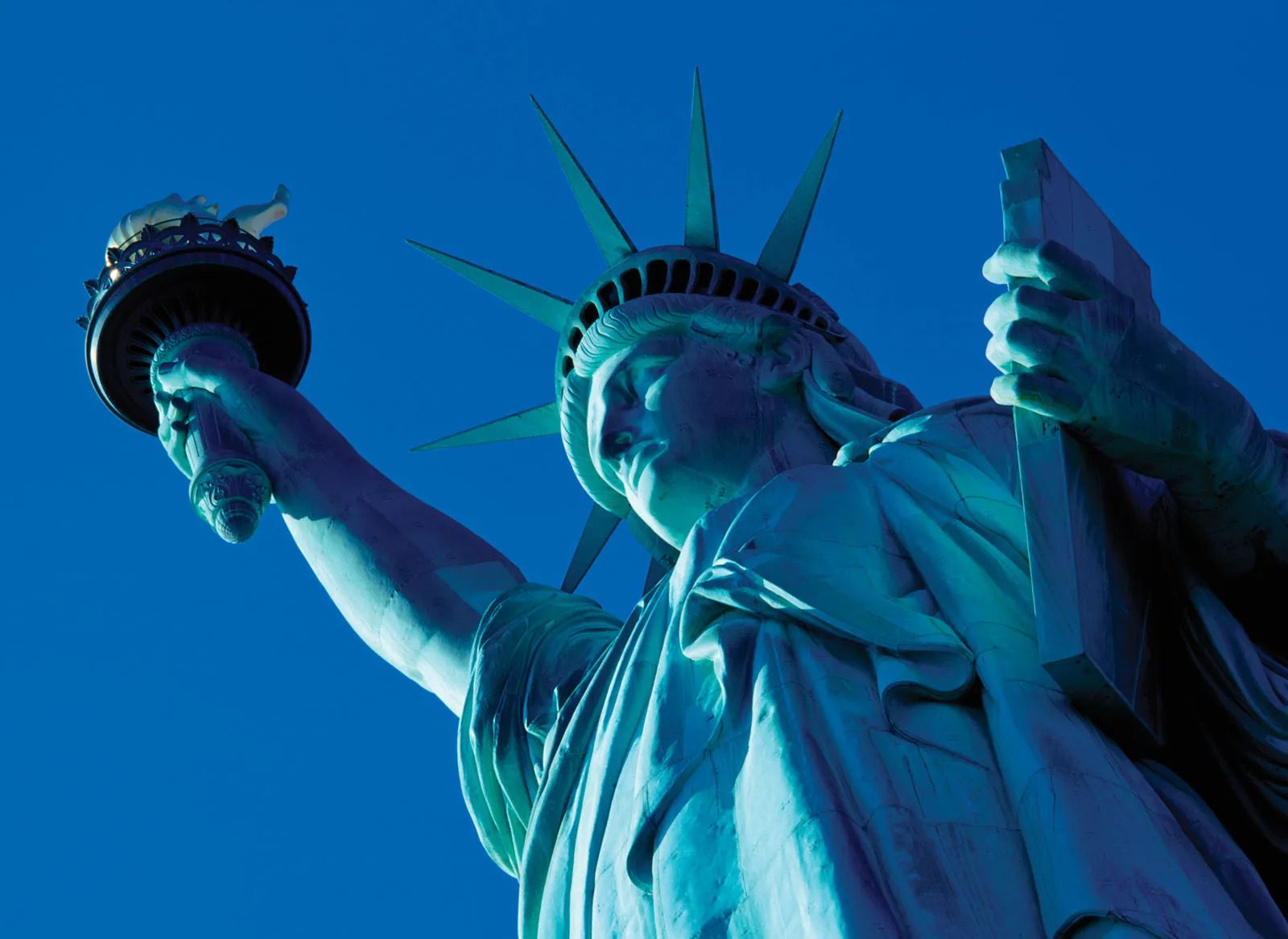
America is often seen as a global model of democracy, freedom, and progress. Its cultural and political influence reaches nearly every corner of the world, shaping aspirations far beyond its borders. Yet as that influence spreads, so does a quieter export—one far more consequential than democratic ideals: a way of life organized around disconnection. Disconnection from community, from land, from care, and ultimately from one another.
For decades, the assumption has been that everyone wants what America claims to offer. That if people elsewhere had enough money, access, or opportunity, they too would choose the American way of life. This belief is so deeply ingrained that it is rarely questioned. It underpins foreign policy, development aid, and even casual conversations about “success.” But that assumption is starting to crack.
Recently, this rupture became visible in an unexpected place. When the president floated the idea of purchasing Greenland, many treated it as a joke or an example of diplomatic absurdity. But the response from Greenlandic officials revealed something far more important than political theater. One official made it clear that Greenland was not interested—not because the price was wrong, but because the premise was. She stated plainly that there was nothing Greenland wanted from America, that their values did not align, and that they had no desire to become like the United States. She rejected the idea that money could be an incentive and pointed instead to the fact that her people already had free healthcare, free education, and a social structure oriented around collective well-being rather than accumulation.
I suspect that many more people around the world agree with her. It is clear that America’s wealth is not universally persuasive and that its model of life is not universally desirable.
The idea that land, sovereignty, and entire societies can be discussed in terms of purchase reflects a deeper cultural logic—one in which everything has a price, and value is primarily economic. This logic is not accidental. It is the natural outcome of a system that treats people as consumers first and members of a community second. In such a system, freedom is framed as choice, choice as consumption, and fulfillment as access to more. What is lost in this translation is the connection to one another, to history, to responsibility, and to the land itself.
This is the model America exports most effectively. Not through conquest alone, but through aspiration. Through media, corporate influence, and the global dominance of its economic structures, America sells a vision of life in which independence is supreme and interdependence is a weakness. Where care is privatized, healthcare is commodified, and social bonds are increasingly replaced by transactions. Where success is measured individually, even when its costs are borne collectively.
Yet societies grounded in stronger communal traditions are beginning to recognize the trade-offs embedded in this model. Free healthcare and education are not merely policy choices; they are reflections of values. They are statements about what a society owes its people and what it refuses to leave to chance. When Greenland’s official rejected money as an incentive, she was not rejecting wealth itself. She was rejecting a worldview that assumes well-being can be purchased and that social responsibility can be outsourced to the market.
This moment matters because it reveals something America struggles to confront: that its influence is no longer uncontested, and its values are no longer universally admired. For a country accustomed to being emulated, moral rejection is particularly difficult to process. America knows how to respond to criticism framed as envy or failure. It does not know how to respond when others say, calmly and without resentment, “We actually do not want that.”
For Africans and others in the global diaspora, this recognition carries particular weight. Many have been told—explicitly or implicitly—that progress requires imitation. That dignity lies in proximity to Western power, and that communal ways of life are obstacles to modernity. But what happens when the societies once held up as ideals begin to reveal their fractures? When loneliness, inequality, and social decay are no longer hidden behind wealth?
What Greenland’s response makes clear is that resistance to American individualism is not backwardness; it is discernment. It is the understanding that a society can be materially rich and morally impoverished. That technological advancement means little if it is paired with widespread disconnection and quiet despair. That a country can call itself free while leaving its most vulnerable to fend for themselves.
America’s greatest export, then, is not democracy. It is the normalization of a life lived alone—responsible only for oneself, detached from collective obligation, and taught to equate worth with productivity. It is the belief that community is optional, care is conditional, and everything—including land and human life—can be reduced to a transaction.
The growing refusal of this model should give us pause. Not because America needs to be admired, but because the world is quietly articulating an alternative set of values—ones rooted in care, sufficiency, and connection. Greenland did not reject America out of hostility. It rejected a vision of life that did not reflect who its people are or how they wish to live.
Others are beginning to do the same.
And maybe the most unsettling truth is this: they are not rejecting America because they lack something. They are rejecting it because they already have what America cannot offer.

