“Fellow Nigerians, better days are ahead of us. The challenges of the moment must make us believe in ourselves. We are Nigerians – resilient and tenacious.”
- Bola Ahmed Tinubu, Independence Day Address, 1 October 2024
Nigerians are often described – by themselves and by their leaders – as “tenacious” and “resilient”. These traits are routinely invoked as evidence of national strength and character. But what do these qualities mean in practice, and more importantly, have they served Nigerian society well? Outside Nigeria, tenacity and resilience are usually celebrated in contexts where individuals or communities overcome extraordinary, temporary adversity in pursuit of a clear goal. In Nigeria, however, they have come to mean something far less admirable: the passive endurance of permanent failure.
The problem is not resilience per se. Resilience is indispensable in moments of crisis – war, natural disaster, or sudden economic shock. What Nigeria exhibits instead is a misguided form of resilience: endurance without resistance, survival without organisation, and coping without accountability. Rather than being applied to confront bad governance, insecurity, failing infrastructure, or institutional decay, Nigerians are encouraged to absorb these failures quietly and adapt to them individually.
In this sense, Nigerians are the living embodiment of Fela Anikulapo-Kuti’s Suffering and Smiling. Singing in the 1970s, Fela captured a society trapped in a cycle of hardship and unproductive cheerfulness:
Every day my people dey inside bus
Forty-nine sitting, ninety-nine standing
Them go reach house, water no dey
Them go reach bed, power no dey
Them go reach road, police go slap
Them go look pocket, money no dey
What is striking is not merely the accuracy of Fela’s description, but its persistence. If anything, the conditions he sang about have worsened. Over decades, Nigerians have displayed their “tenacity” and “resilience” by steadily assuming responsibilities that should be the responsibilities of the State. We began by tolerating erratic electricity supply without holding government accountable. Soon, communities were buying electricity poles and transformers for public utilities that would still bill them monthly. Then came near-universal dependence on generators, followed by a shift to solar and inverter systems as fuel prices rose. Today, this same logic has extended to security: citizens fortify their homes, hire private guards, or pay ransoms – quietly accepting that personal safety is now a private obligation.
Each stage in this progression represents the same underlying pattern: the privatisation of public failure. The more Nigerians adapt, the less pressure there is on the state to perform its basic functions.
Undergirding this pattern is a pervasive sense of desperation and helplessness. Nigerians have not lost the capacity to think, but many have lost faith that collective thinking and action can yield results. As a result, society lurches from one fire-brigade solution to another. When insecurity becomes unbearable, vigilante groups such as the Bakassi Boys emerge, offering swift but brutal justice. They gain popular support not because they represent a sound security model, but because they appear to work in the absence of a functioning state. Yet there is little sustained collective action to demand deep reform of the police, military, or justice system.
Similarly, many cling to the hope that foreign intervention – U.S. military drones, missiles and advanced weaponry – will somehow resolve Nigeria’s security challenges. This reflects not strategic thinking, but despair: a substitution of external salvation for internal reform.
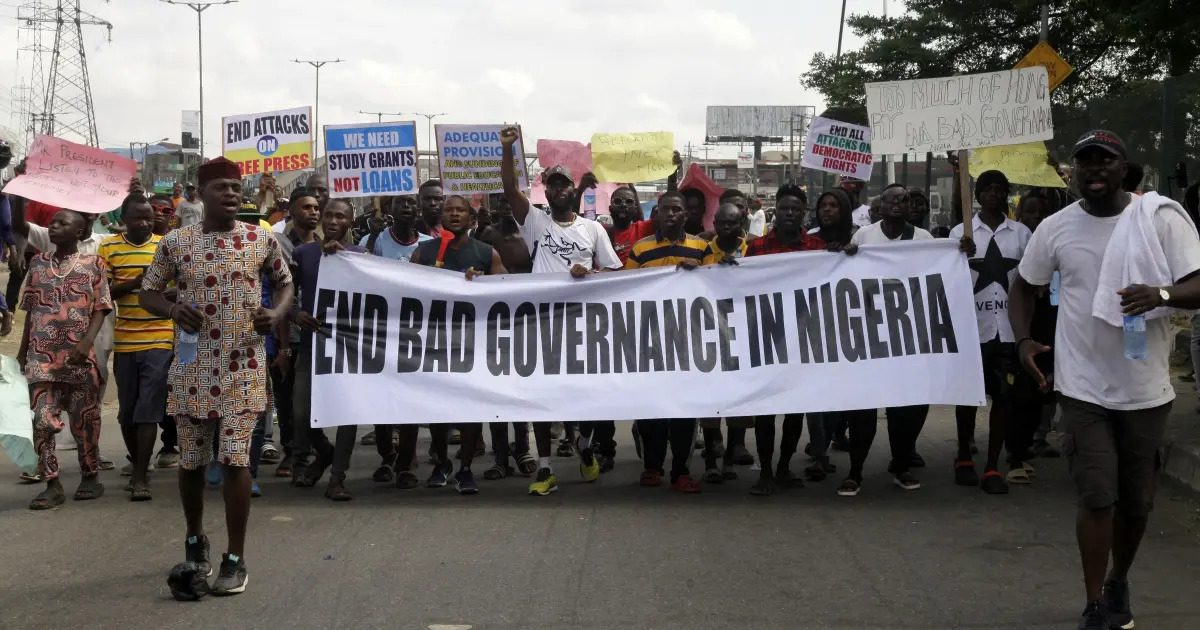
This mindset is reinforced whenever Nigerians are encouraged to use democratic processes to challenge a corrupt and self-serving political class. The response is often defeatist: “We tried. There is nothing more we can do. Did you not see what happened during #EndSARS?” The brutal suppression of the #EndSARS protests, and the loss of young lives, has become a collective trauma – one that the state has successfully weaponised to instil fear and discourage future mobilisation. Fatalism takes root, wrapped in familiar phrases: “It is well.” “Only God can save us.”
It would be dishonest to ignore the structural constraints that shape this behaviour. Poverty, repression, ethnic division, and the credible threat of violence all make collective action costly. Yet resignation, however understandable, is not without consequences. Over time, it becomes complicity. When endurance replaces citizenship, resilience ceases to be a virtue and becomes a trap.
Unless we fundamentally rethink what we celebrate as strength, unless we abandon this misguided version of “tenacity” and “resilience” and redirect energy towards organisation, accountability, and collective action, the future is bleak. Survival alone is not progress. If we continue to adapt endlessly to dysfunction rather than confront it, we are not resilient; we are simply enduring our decline as a society.